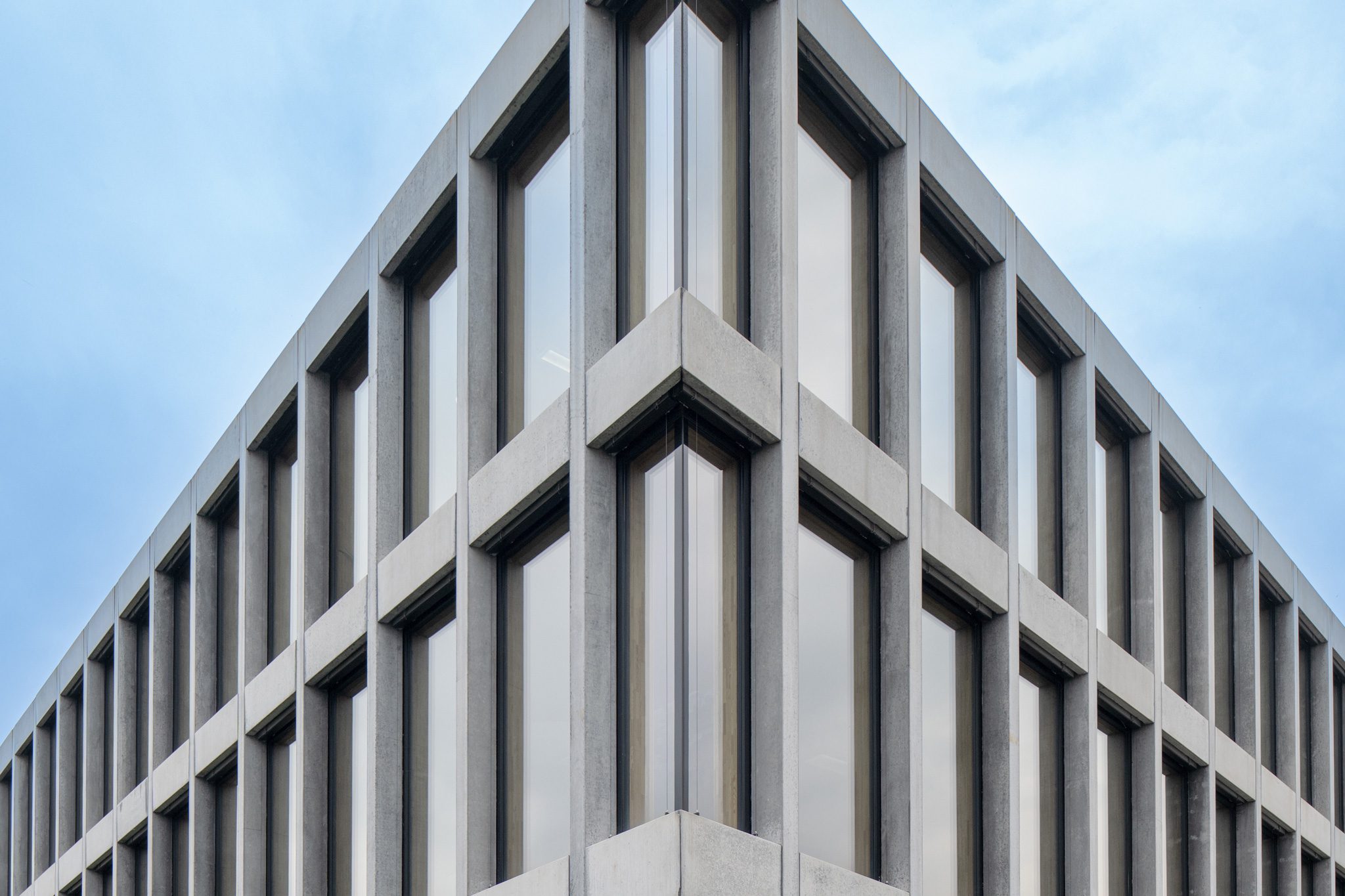
At the Costruiamo il Futuro conference held in Milan on March 10, 2026, Marco Righi, Managing Partner at HB, reflected on the evolving role of advanced prefabrication within complex construction processes, positioning it as a decisive factor in the transformation of contemporary building practices.
What emerged is a clear shift in perspective. Prefabrication is no longer confined to efficiency-driven solutions or cost optimization. It is increasingly understood as an integrated design and engineering paradigm capable of aligning structural performance, energy behavior, construction timelines and quality control within a single coherent system.
In this context, industrialization does not simplify complexity by reducing it, but by governing it. Moving critical phases of construction into controlled environments allows for higher levels of precision, predictability and repeatability. These qualities become essential when dealing with large scale or highly articulated projects. The construction site itself evolves into the final stage of an orchestrated process rather than the place where complexity is resolved.
The CityWave project in Milan was presented as a tangible demonstration of this approach. Prefabrication was not treated as a secondary technical layer, but as an integral component of the project strategy. It enabled rigorous control over execution times and construction tolerances while supporting the architectural vision with consistency and reliability.
This alignment between industrial processes and design intent marks a crucial point. Prefabrication has long been perceived as a limitation to architectural expression. What emerged instead is a different reality. When integrated from the earliest design stages, it becomes a tool that enhances formal clarity, supports material precision and ensures that what is designed can be faithfully realized.
The value of this approach extends across the entire lifecycle of the building. From design coordination to on site assembly, from performance verification to long term durability, prefabrication introduces a level of control that traditional construction methods struggle to achieve. It reduces uncertainty, minimizes variability and contributes to a more reliable and measurable outcome.
Righi’s intervention highlighted that the real opportunity lies not in prefabrication itself, but in how it is conceived and applied. When treated as a simple operational solution, its impact remains limited. When it becomes a shared framework between engineering, architecture and construction, it evolves into a strategic lever capable of redefining both process and result.
In this perspective, prefabrication represents more than a technological advancement. It reflects a broader cultural shift in the construction industry. A shift from reactive problem solving to anticipatory design, from fragmented workflows to integrated systems, from approximation to precision.
The future of complex construction depends on this transition. Not simply building faster, but building better through processes designed with the same level of care as the structures they produce.