CityWave

A suspended architecture reshaping milan's skyline

© BIG, Citylife - © Beauty and The Bit
Location Milan (MI), Italy
Client Generali S.p.a. / Citylife S.p.a.
Architect Bjarke Ingels Group: BIG
Services Structural Design / Geotechnical Design / Site Supervision and Construction Advisory

An unprecedented engineering achievement: a one‑of‑a‑kind construction challenge that blends research, technology and elegance, transforming structural complexity into an iconic landmark destined to shape the future identity of the city.

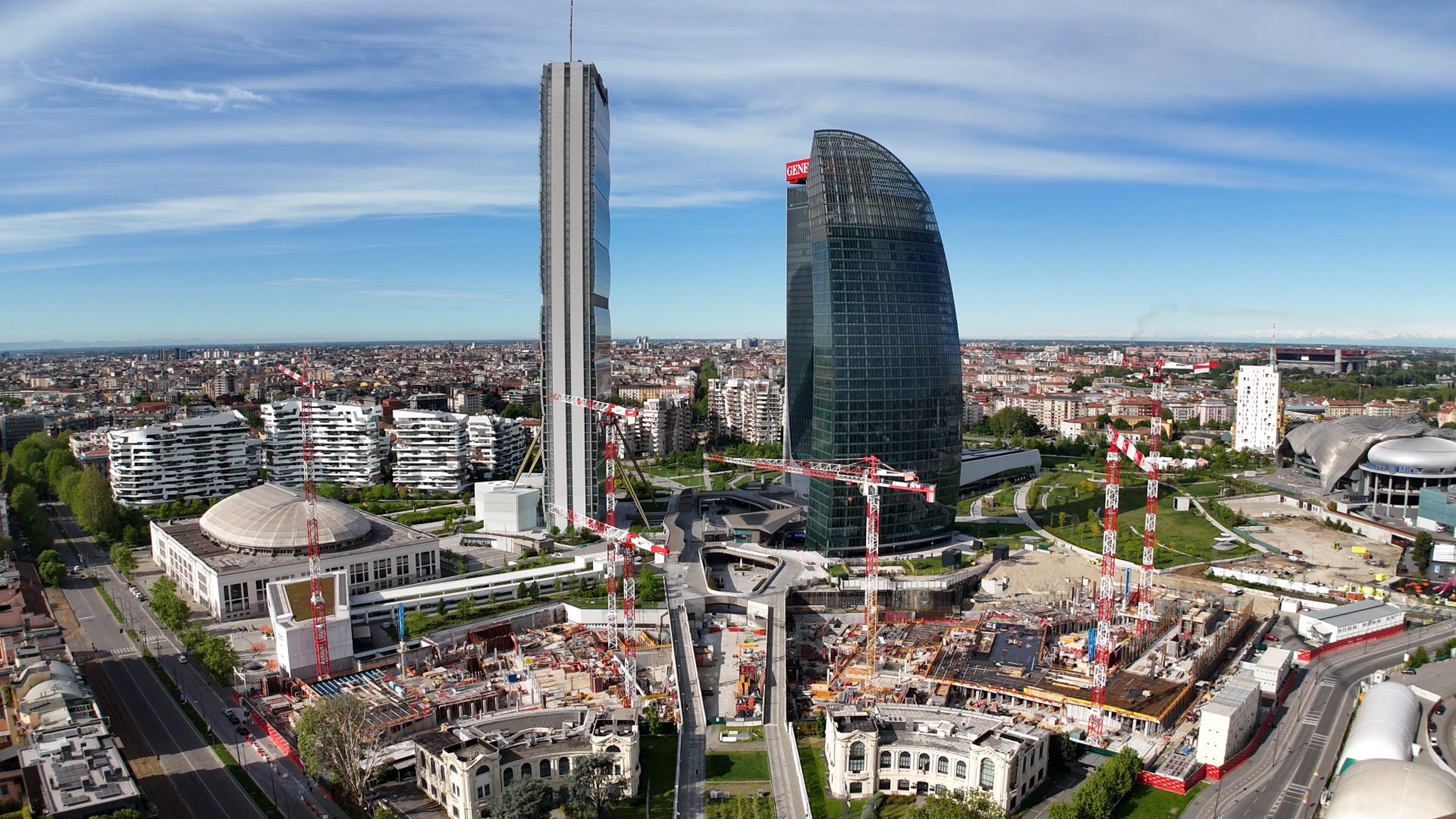
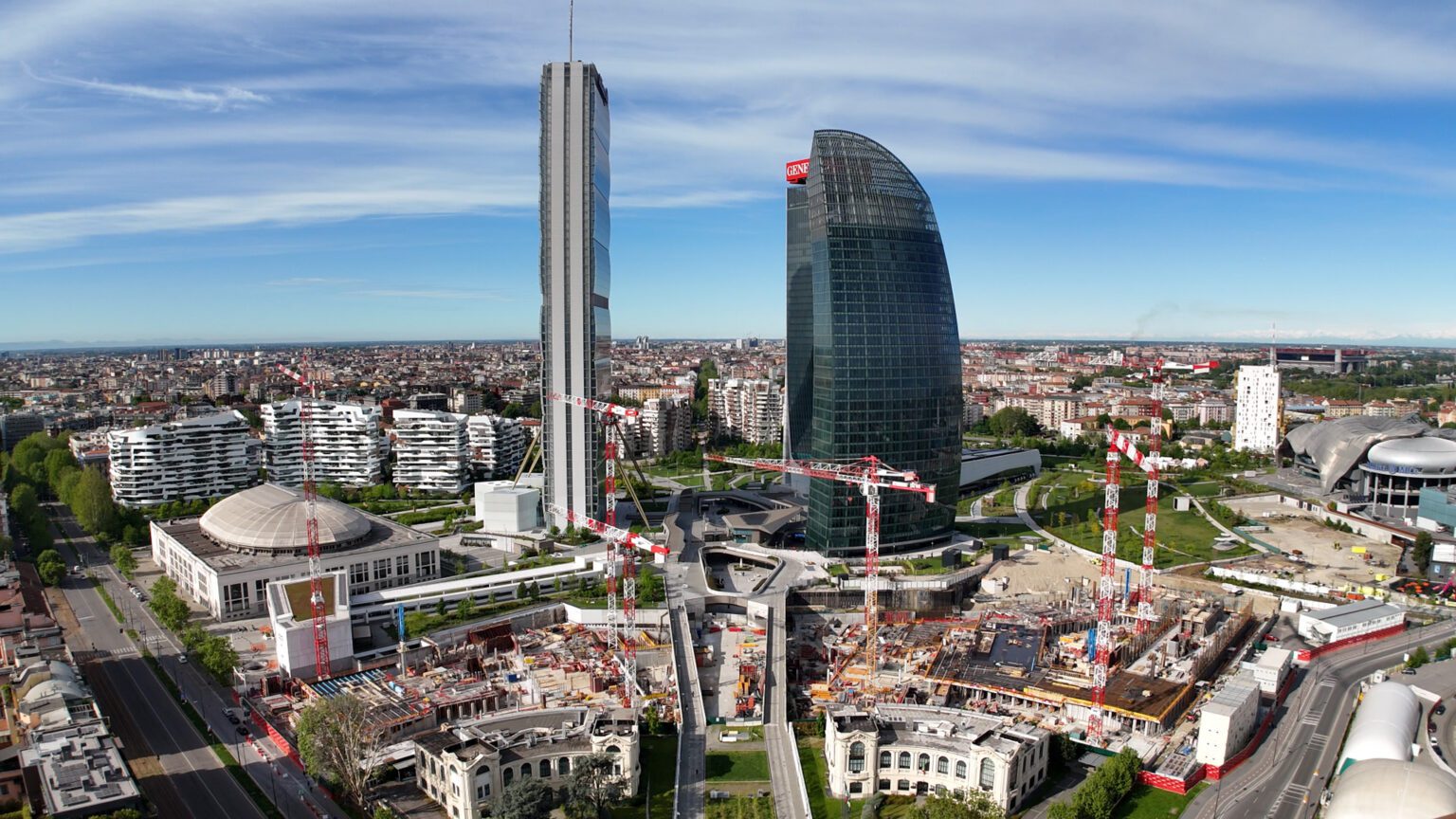
In the former historic district of Fiera Milano, CityLife, since 2004, has served as a laboratory for a new Milan.
The towers designed by Arata Isozaki, Zaha Hadid and Daniel Libeskind have defined an unmistakable skyline, paving the way for a district that continues to symbolize Milan’s urban transformation: an area in constant evolution, capable of combining architectural experimentation with engineering innovation. Today, CityWave fits into the broader development of CityLife, completing its architectural and urban transformation.

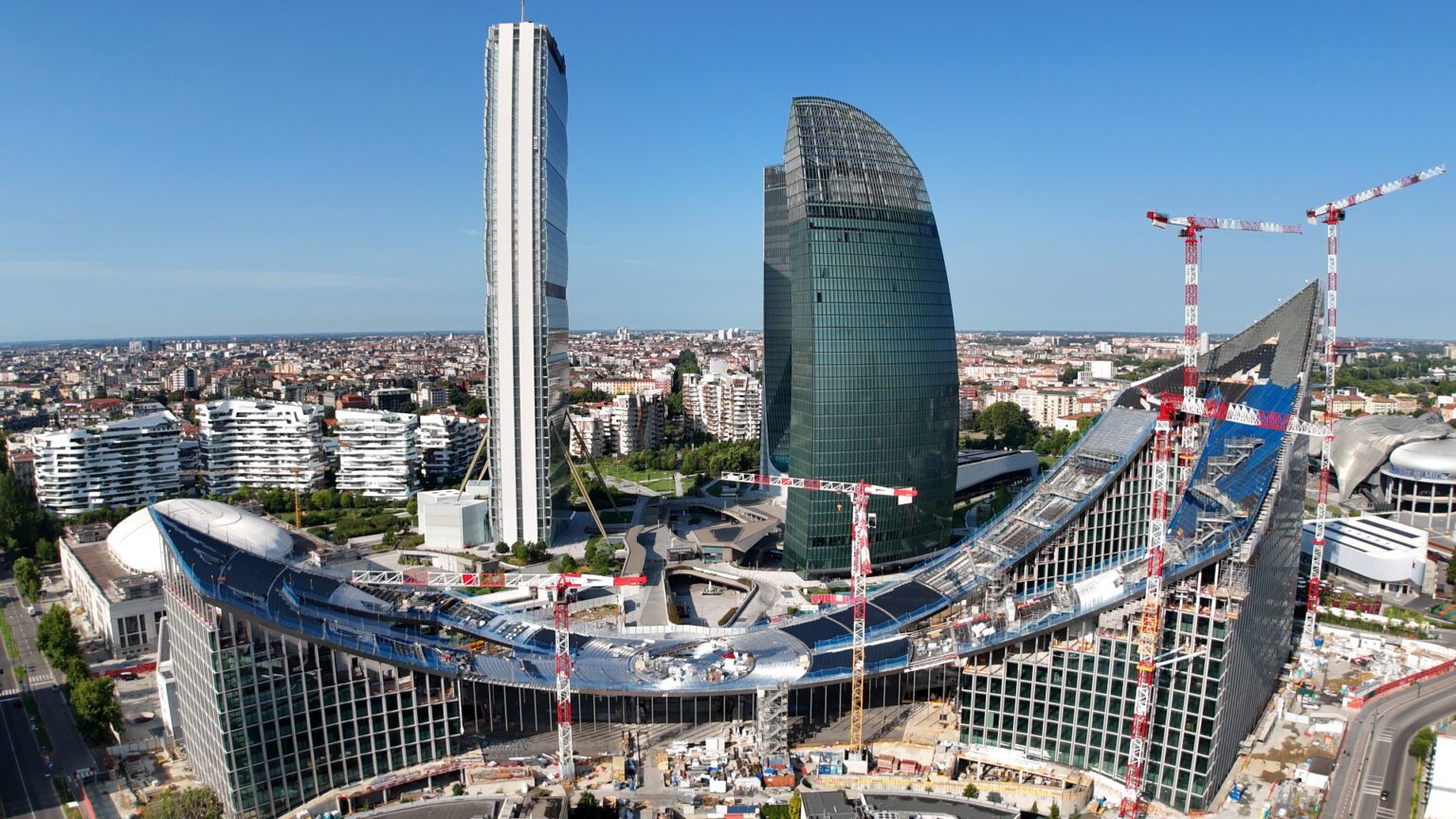
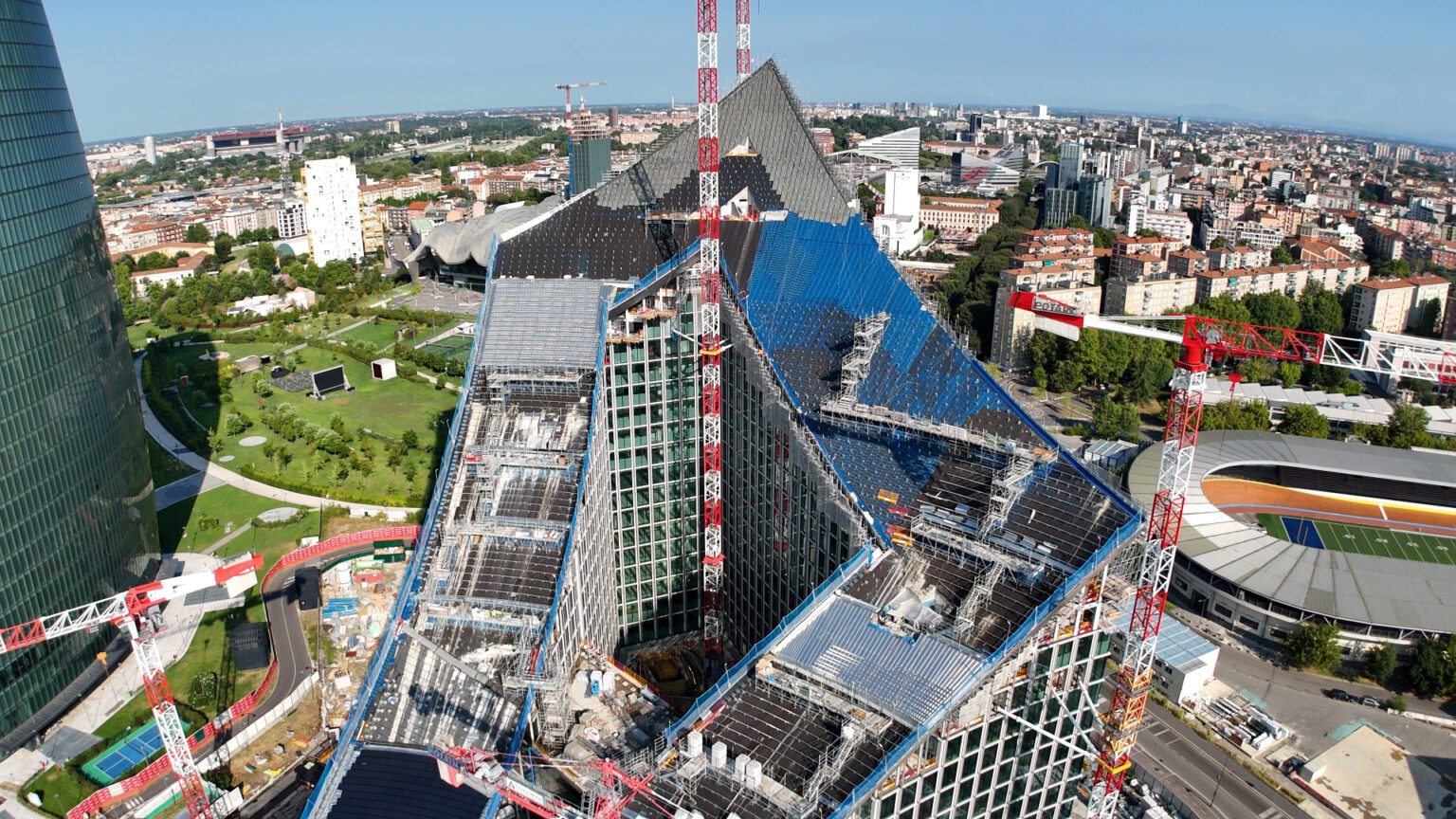
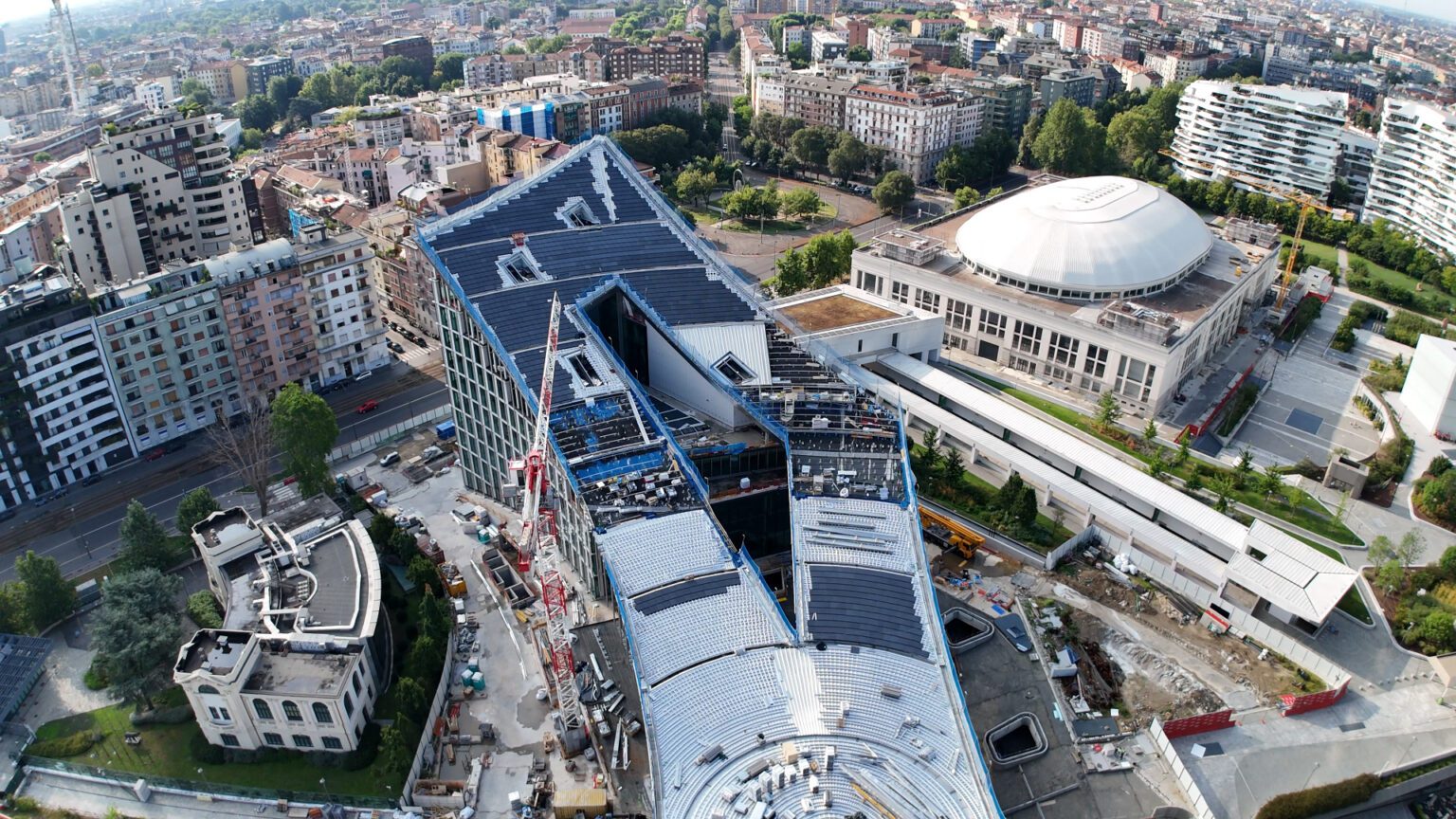
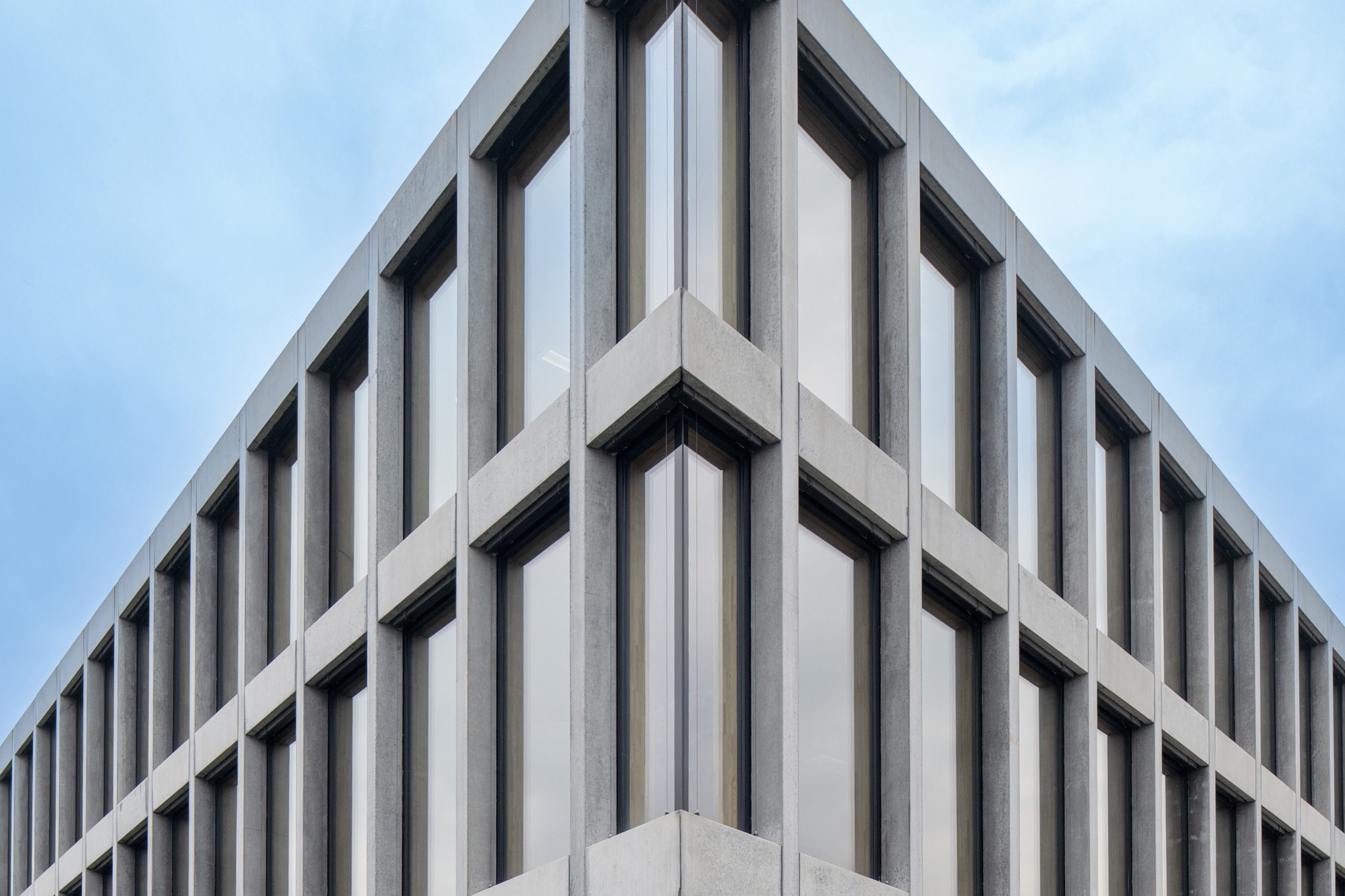
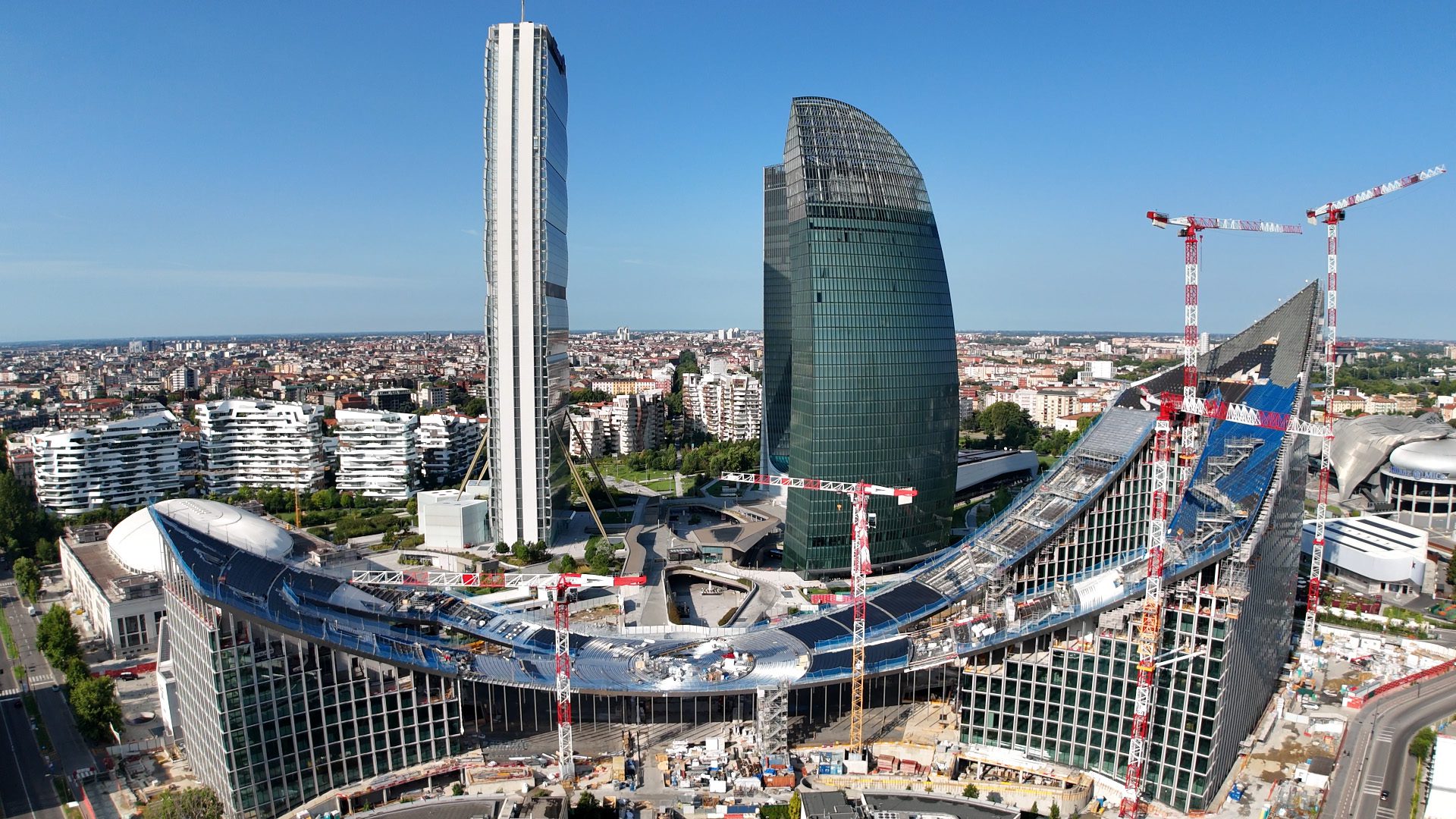
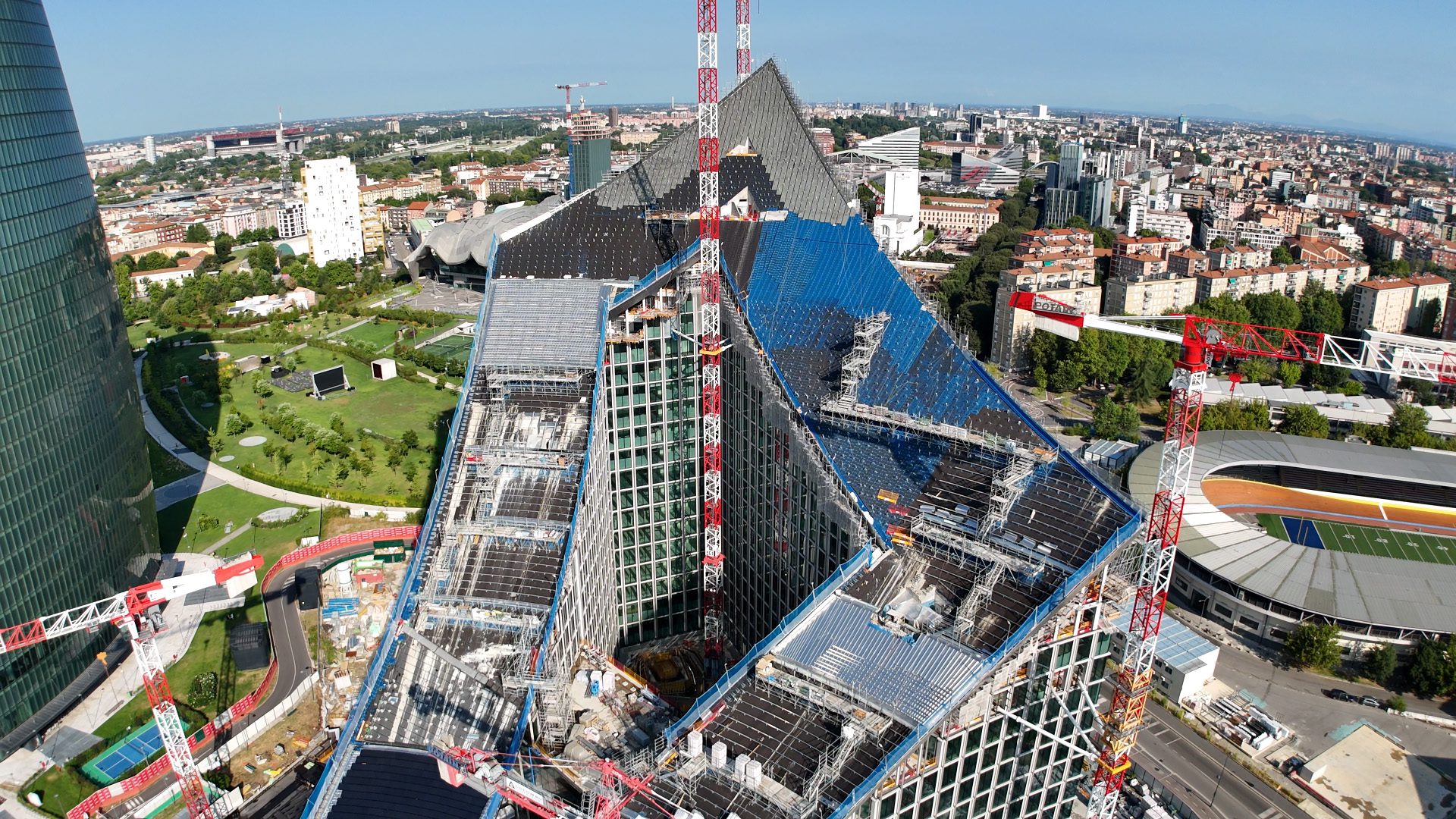
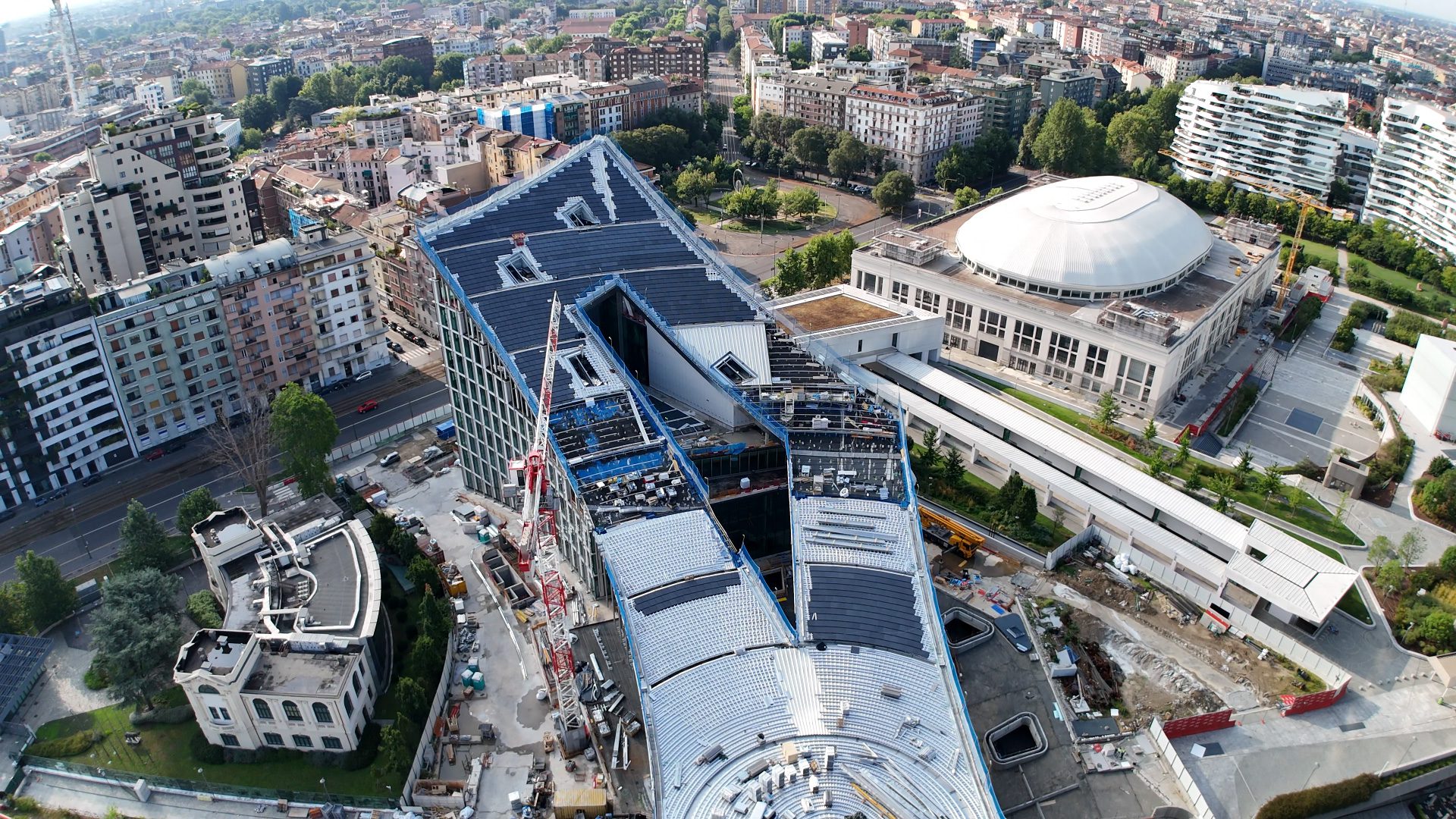
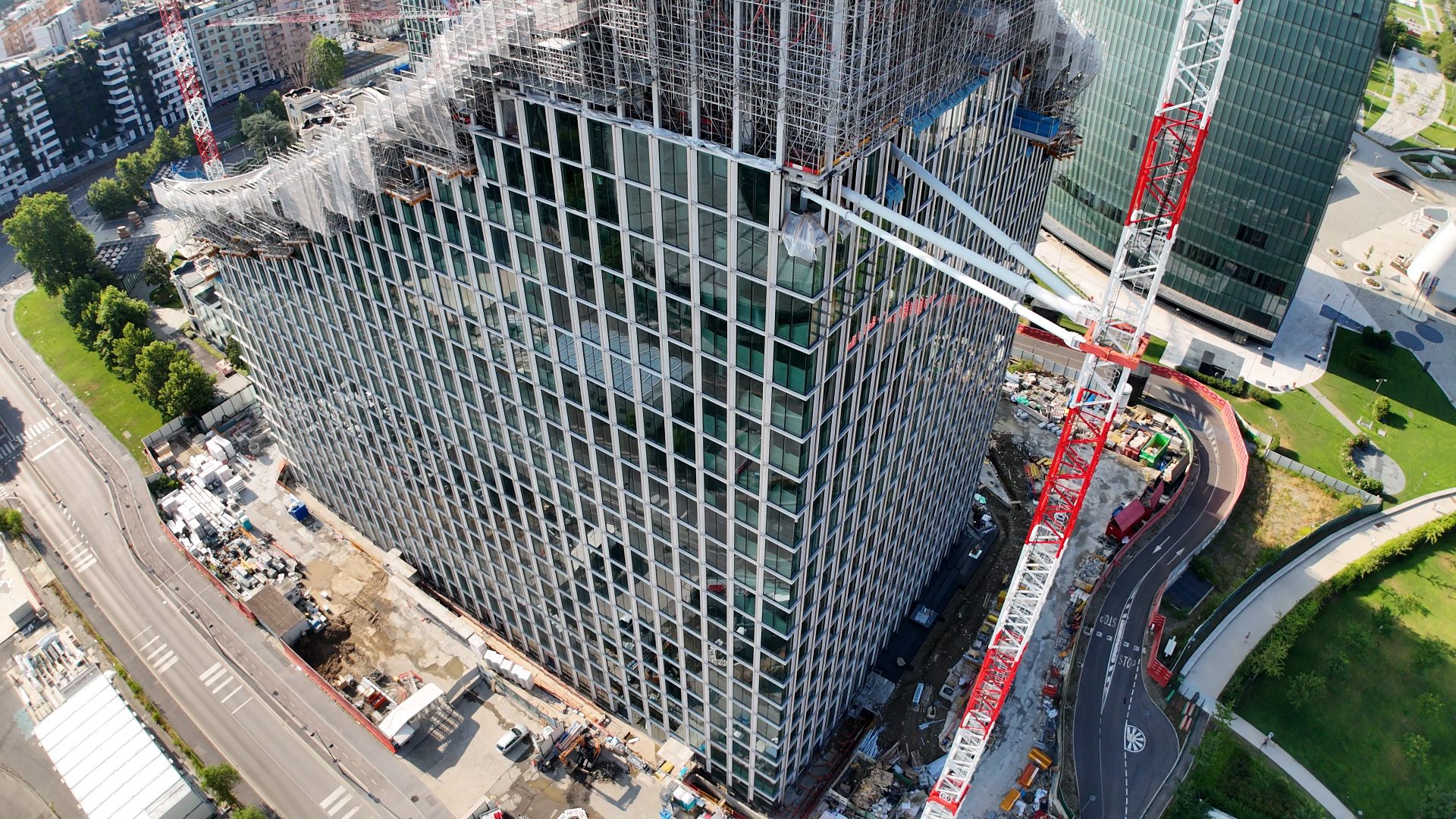
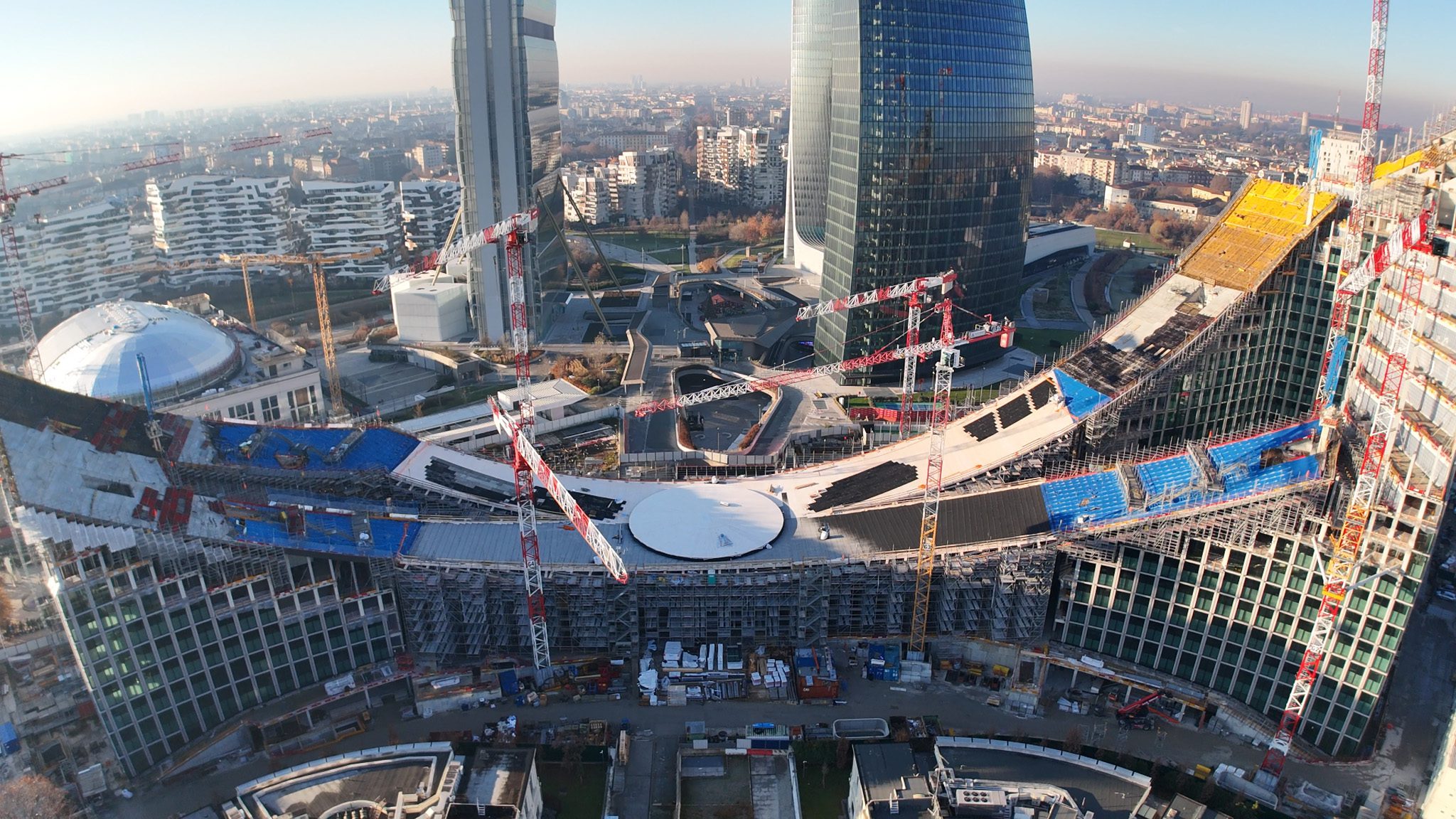
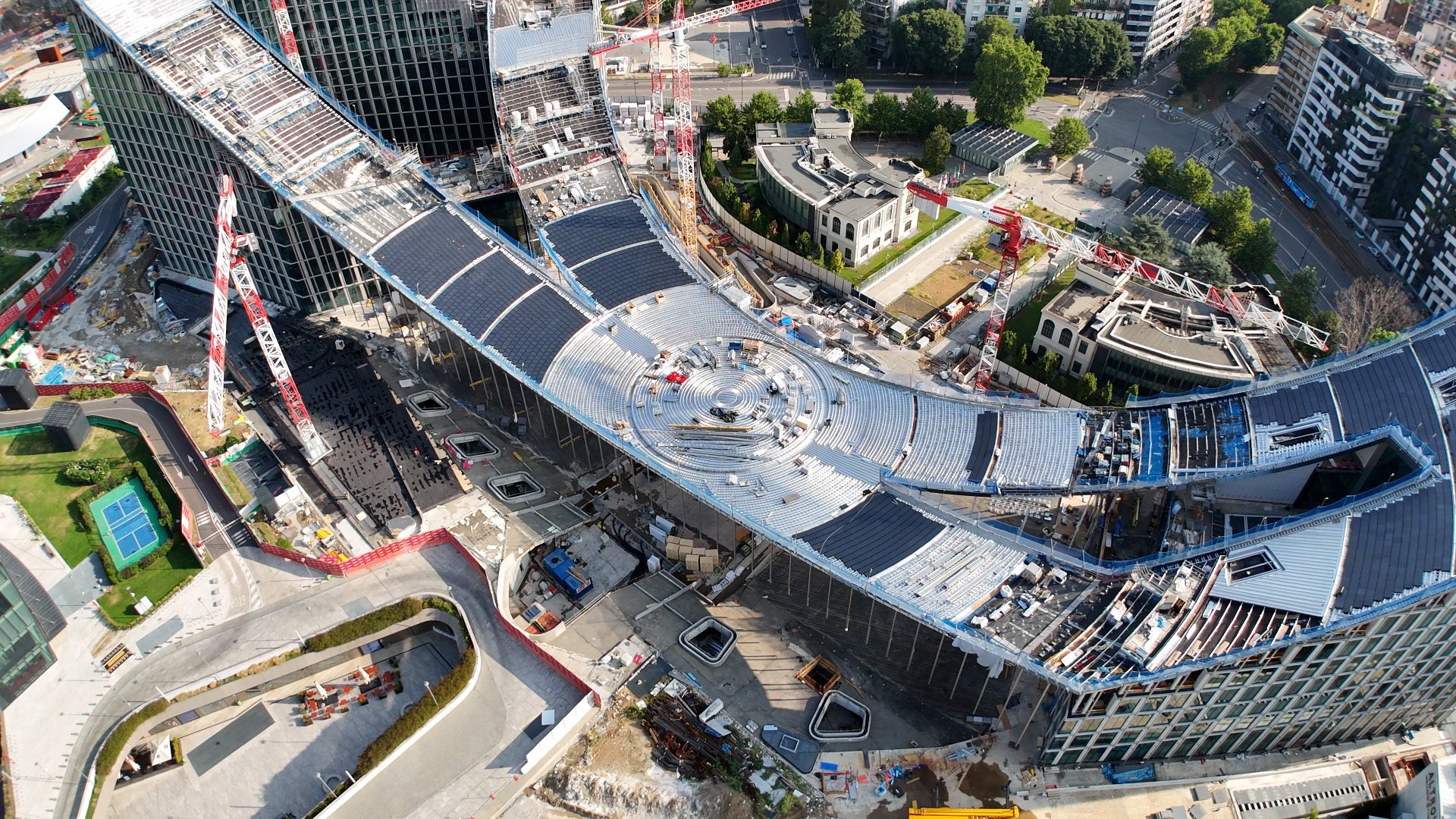
CityWave, designed by BIG (Bjarke Ingels Group) and structurally engineered by HB, is composed of two buildings (RD and RE) with different proportions, connected by a highly distinctive architectural feature: the large suspended structure linking the two volumes, whose wave-like form gives the project its name. Behind the elegance of its formal expression lies extensive engineering and research: the structures were conceived to balance stability, lightness and refinement through the use of advanced technologies and innovative materials.
The primary use of the buildings is office space, with the sole exception of the panoramic upper floors of building RD, which accommodate a bar and a panoramic restaurant. The project also includes an auditorium, parking facilities and landscaped public areas.

Delivering a project of such complexity required the adoption of advanced engineering solutions and cutting-edge construction technologies, capable of meeting both structural and aesthetic requirements.

The total built area is 116,000 m², with an overall volume of 475,000 m³. Construction began in 2023, for a total contract value of €250 million.

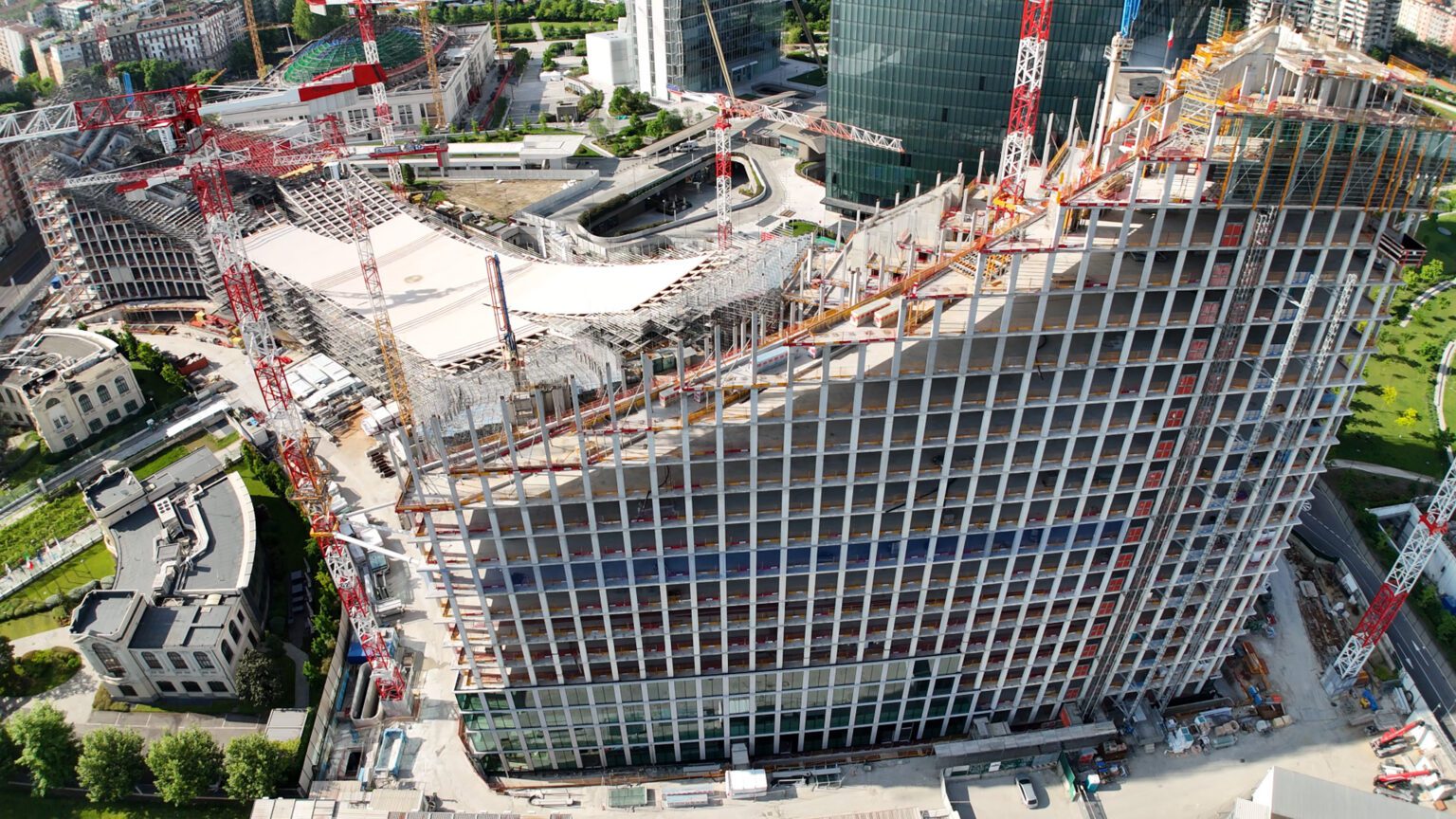
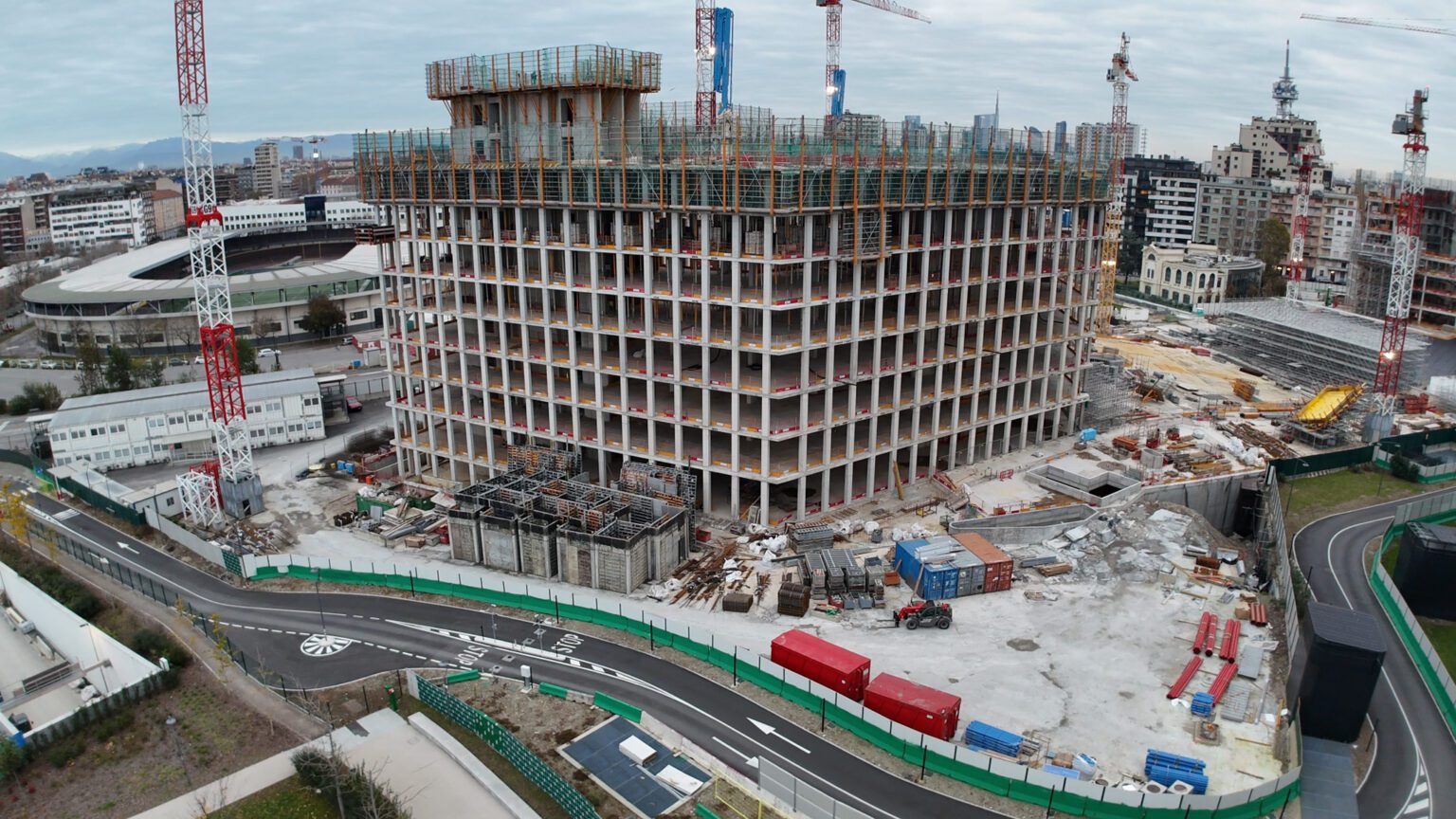
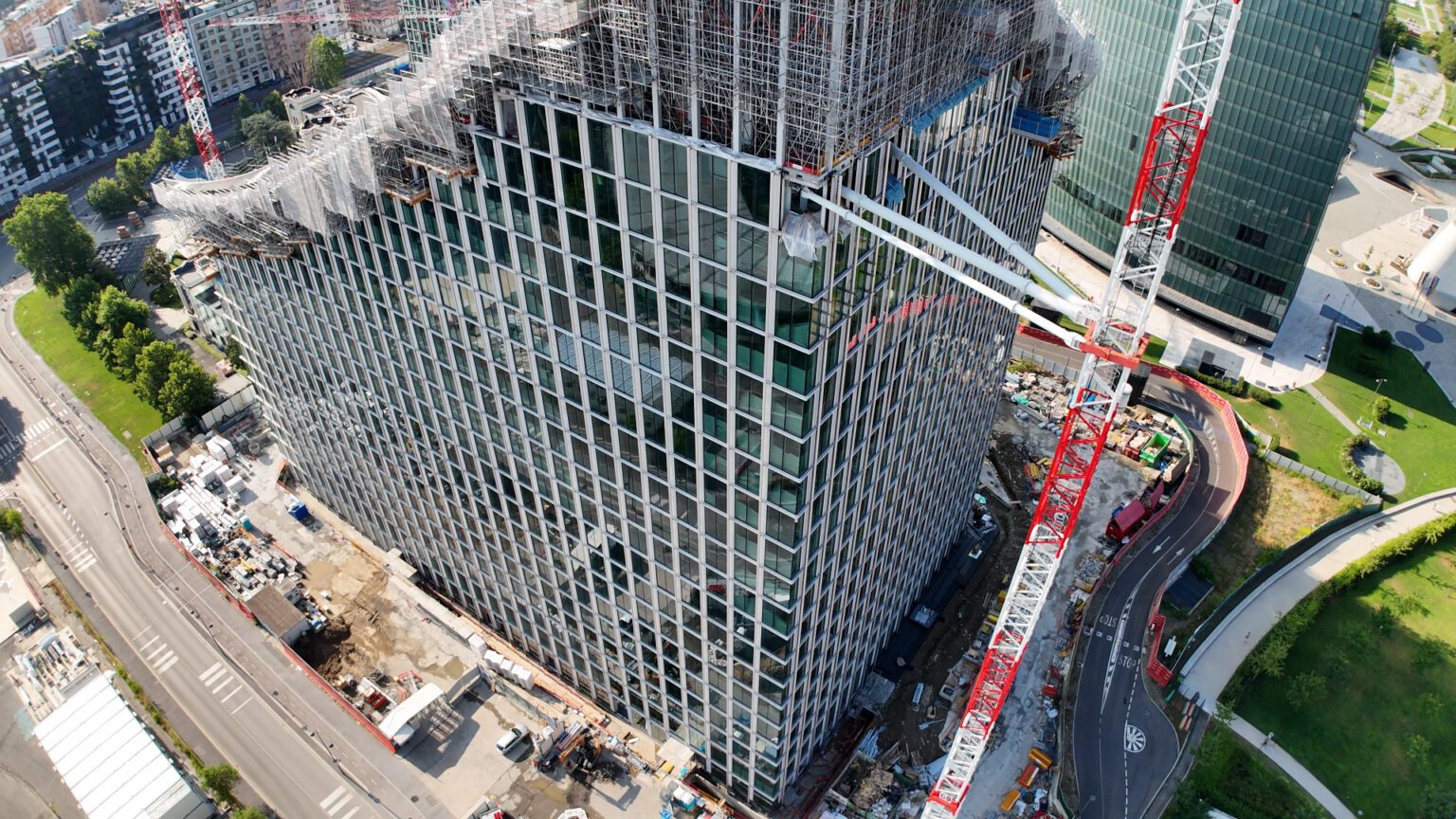
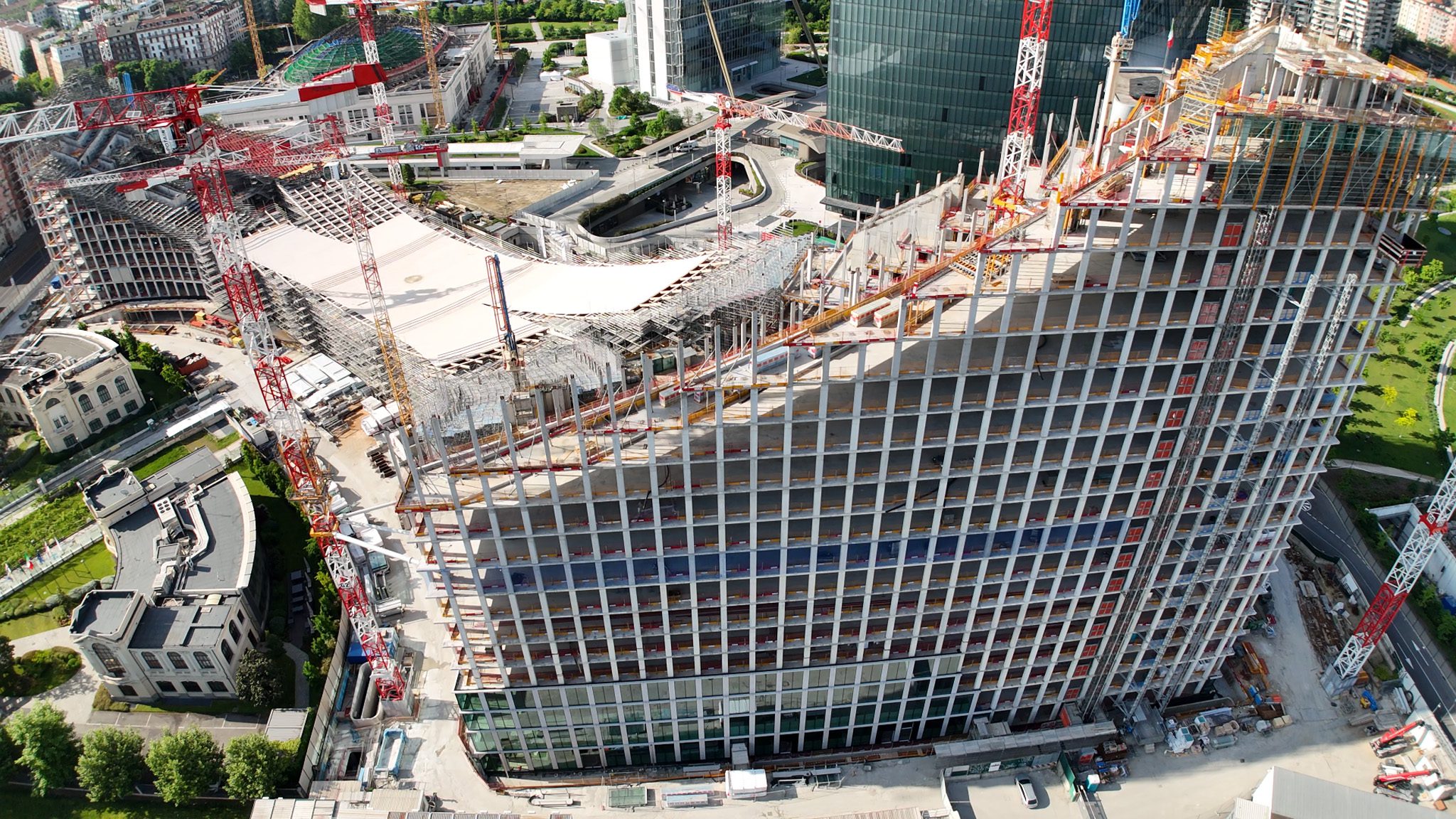
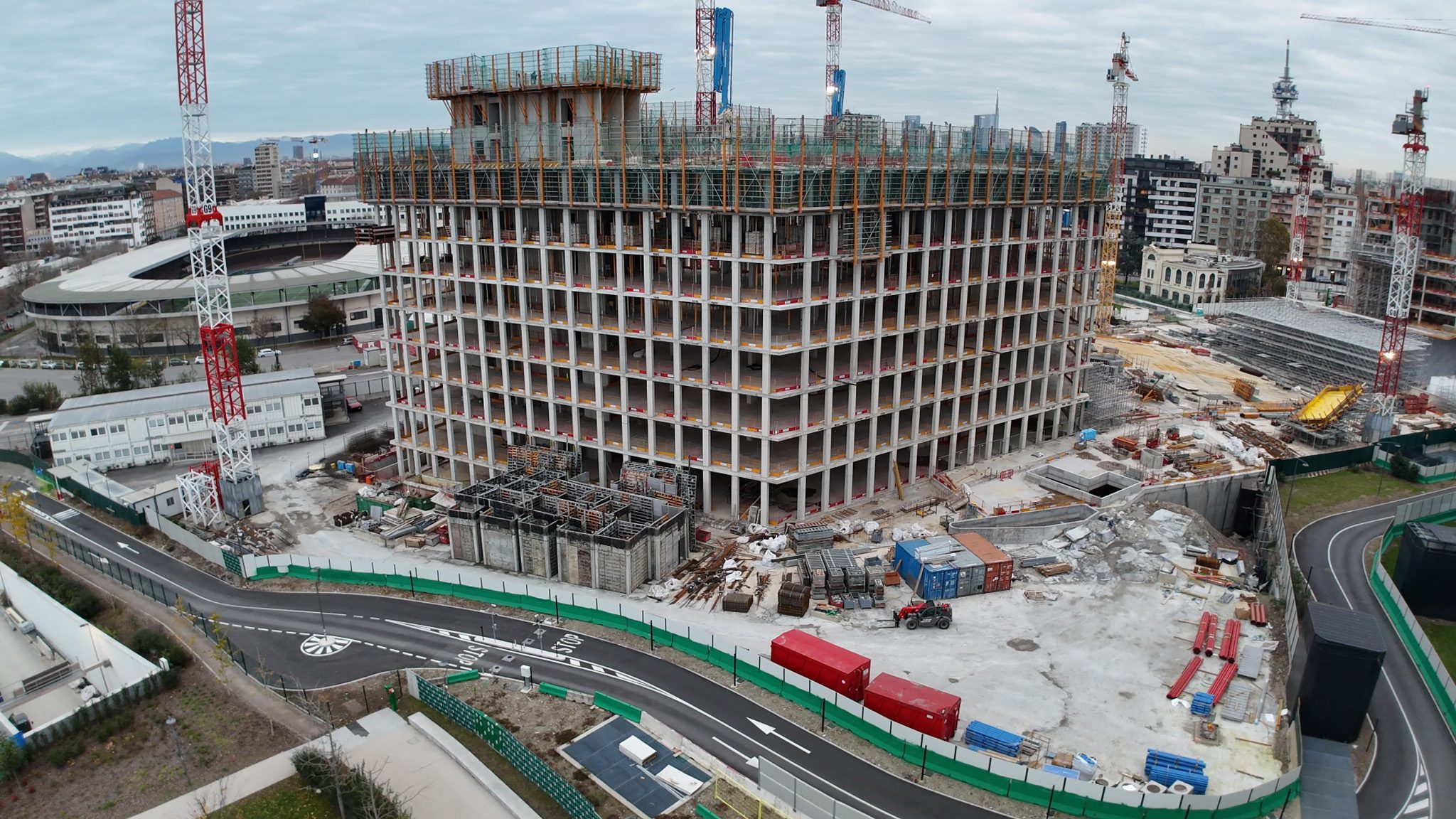
Building RD, the taller of the two, comprises two basement levels and twenty above-ground floors, reaching a total height of 105 m. Building RE includes two basement levels and ten above-ground floors, with a total height of 55 m. The two structures are connected by the suspended element known as the Canopy.

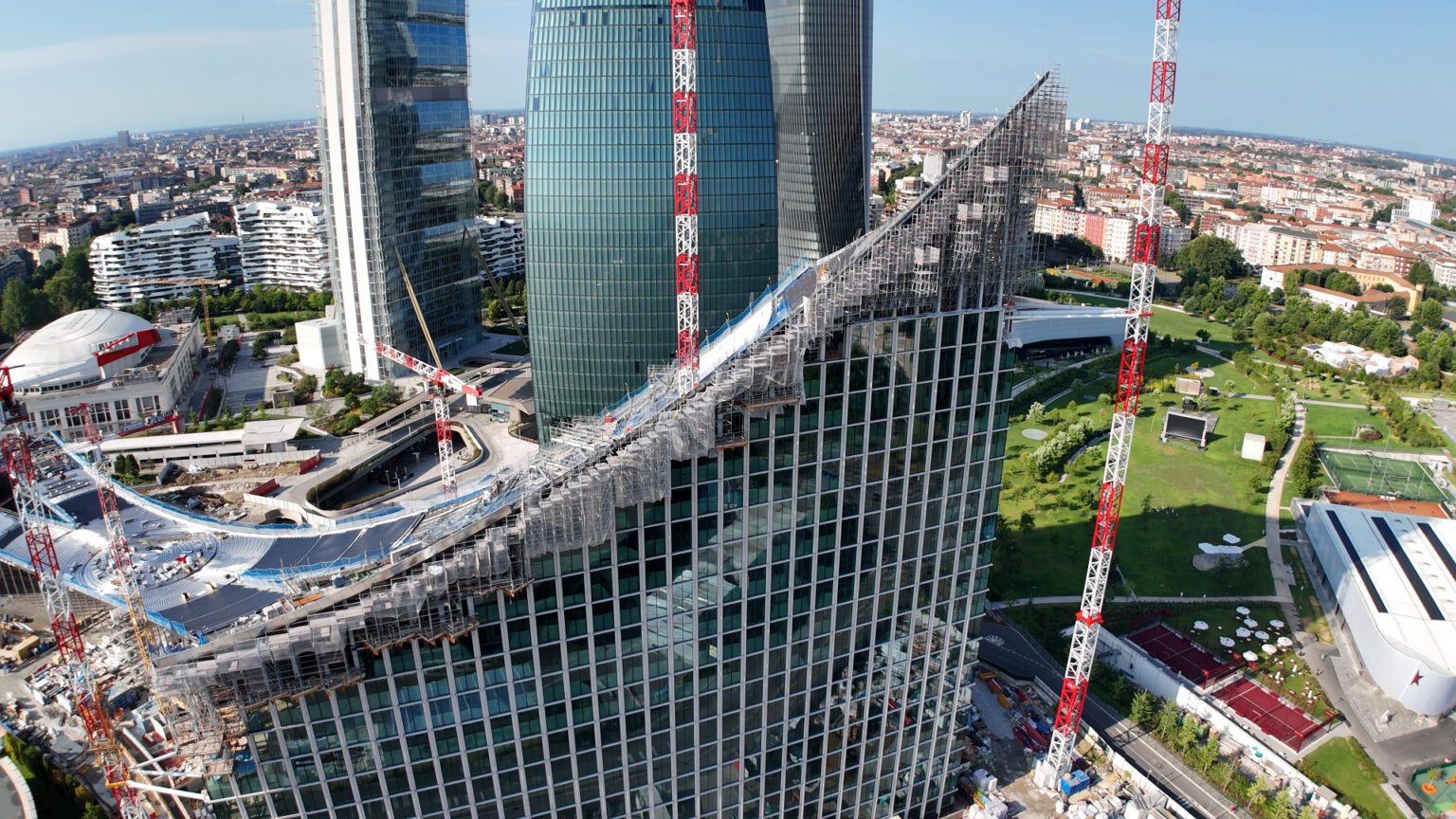
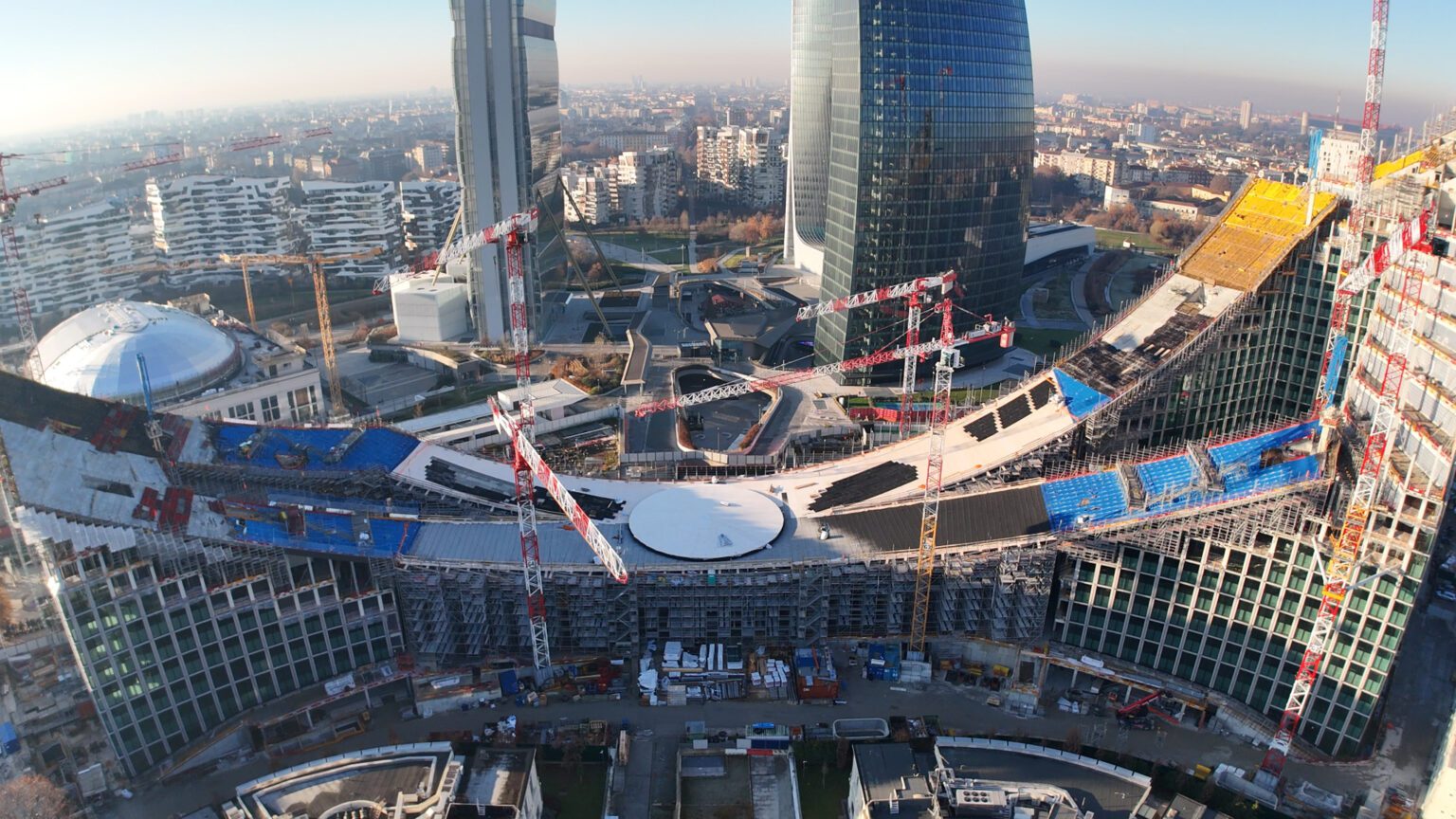
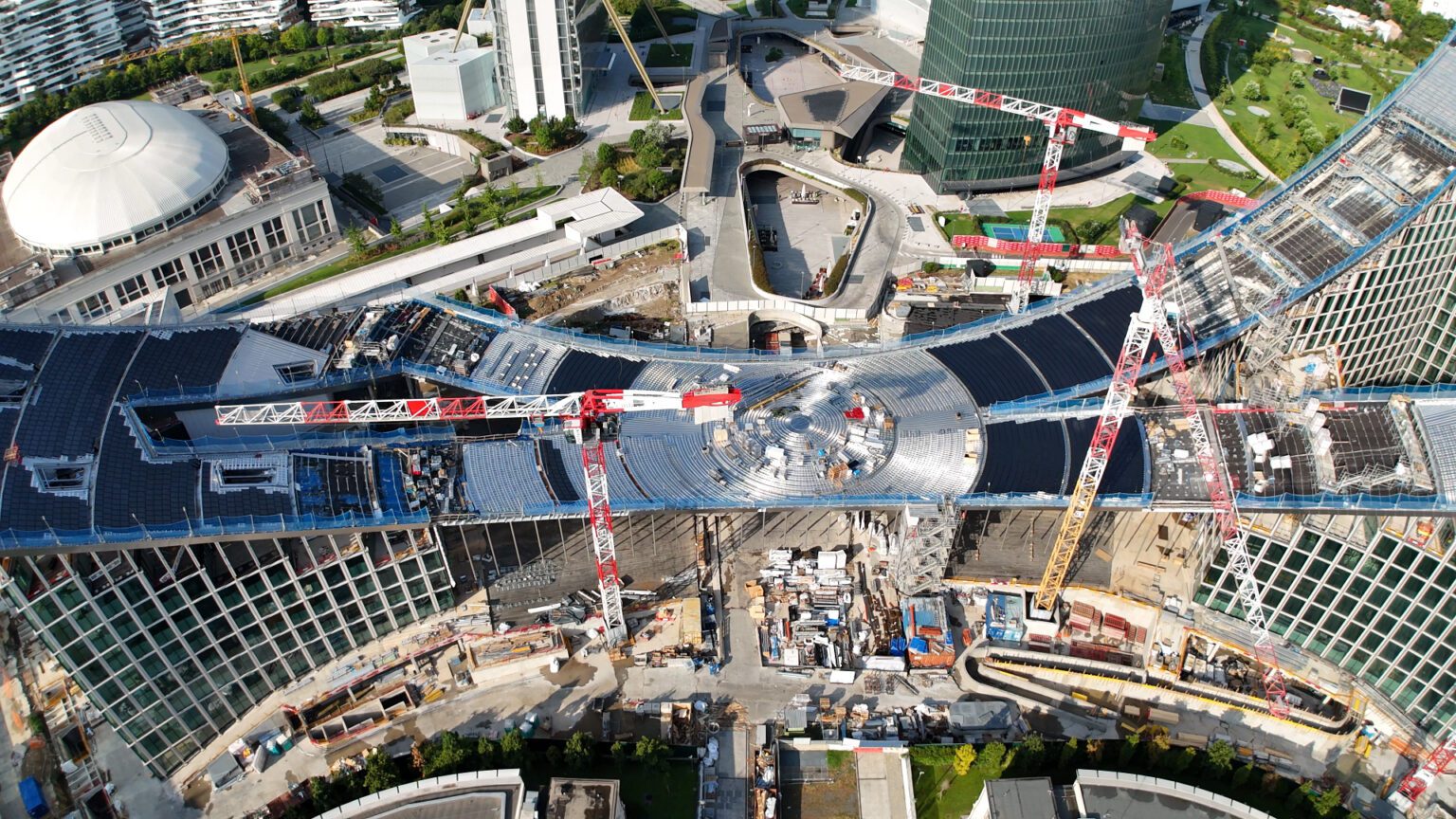
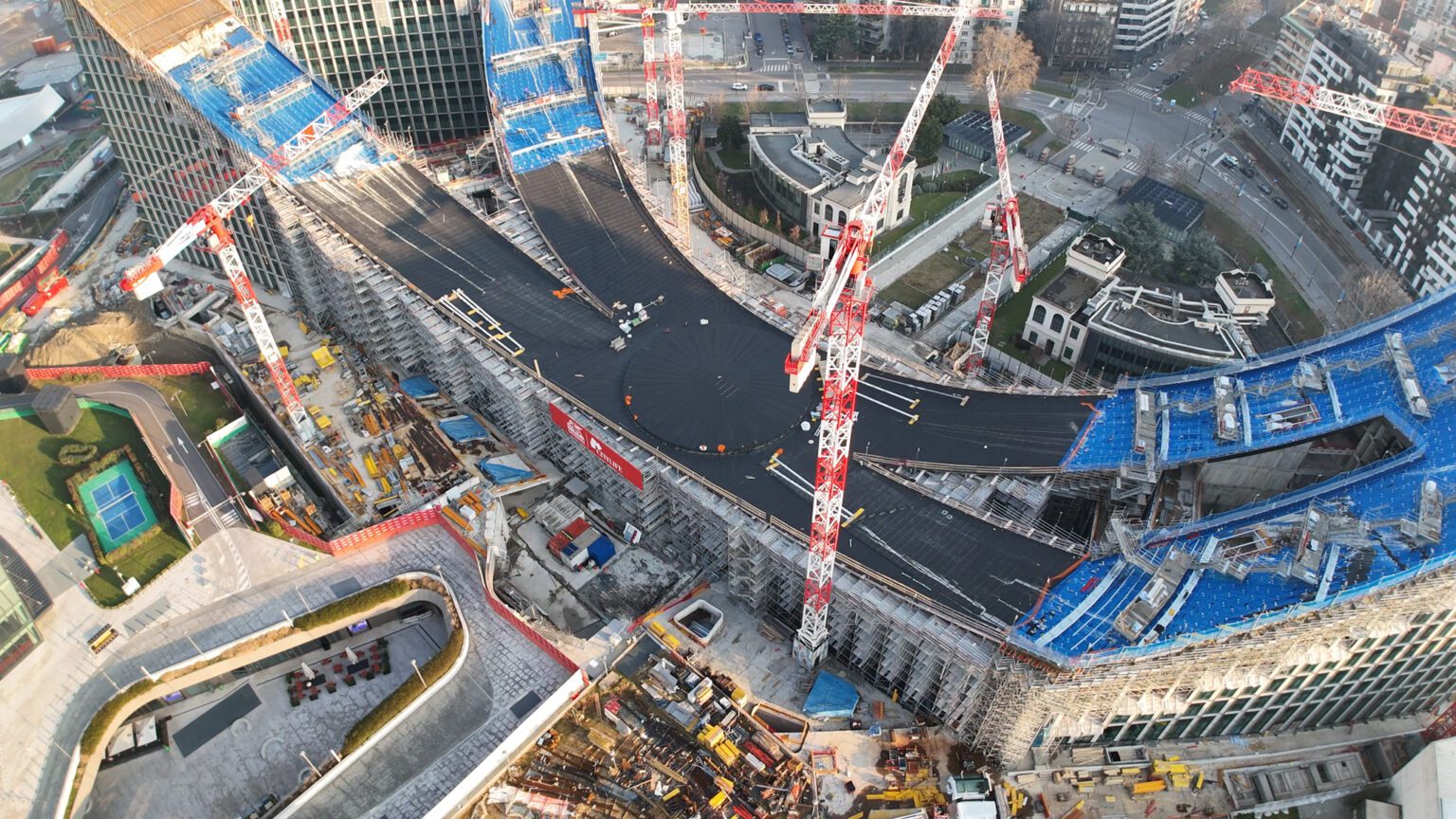
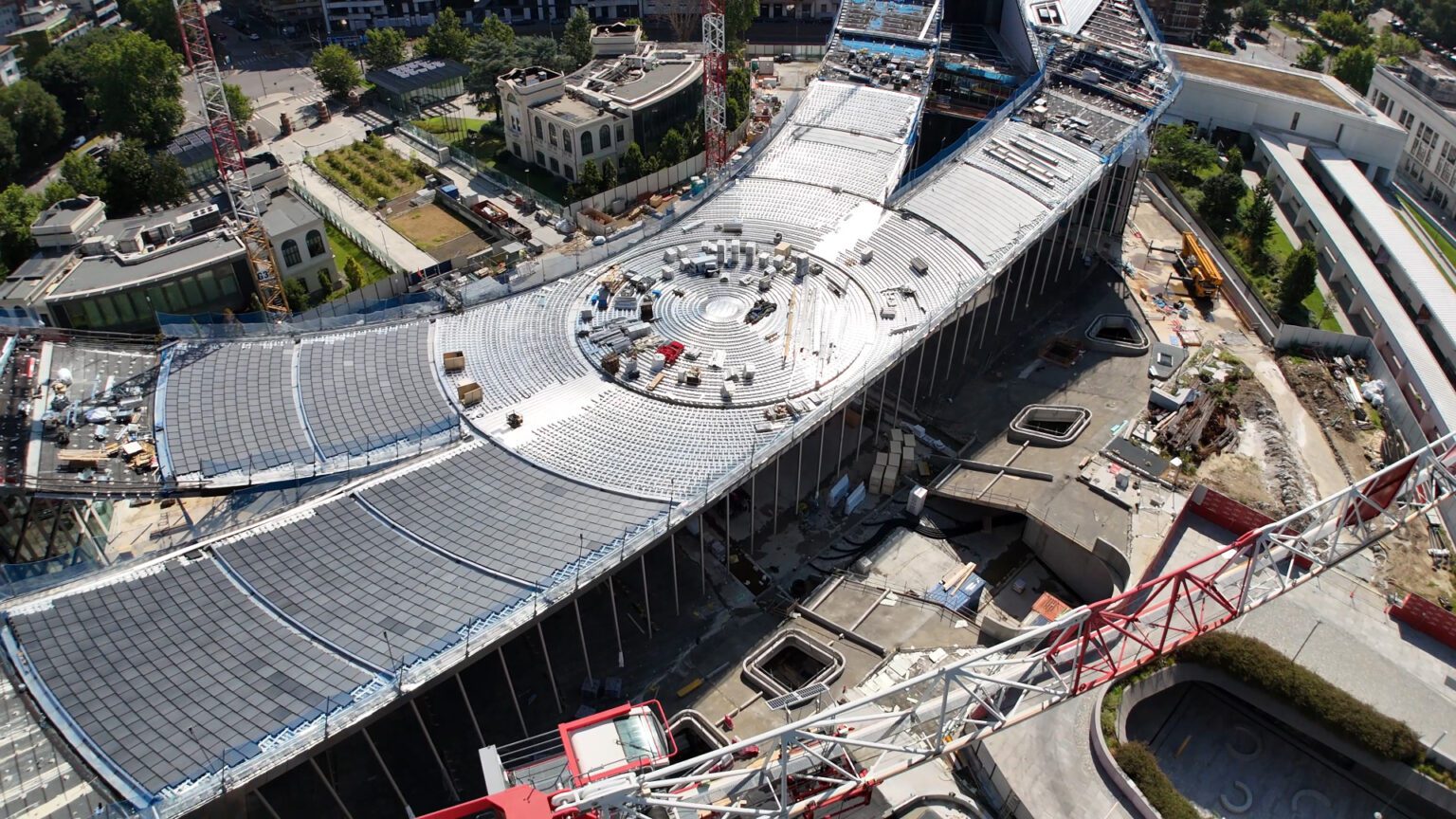
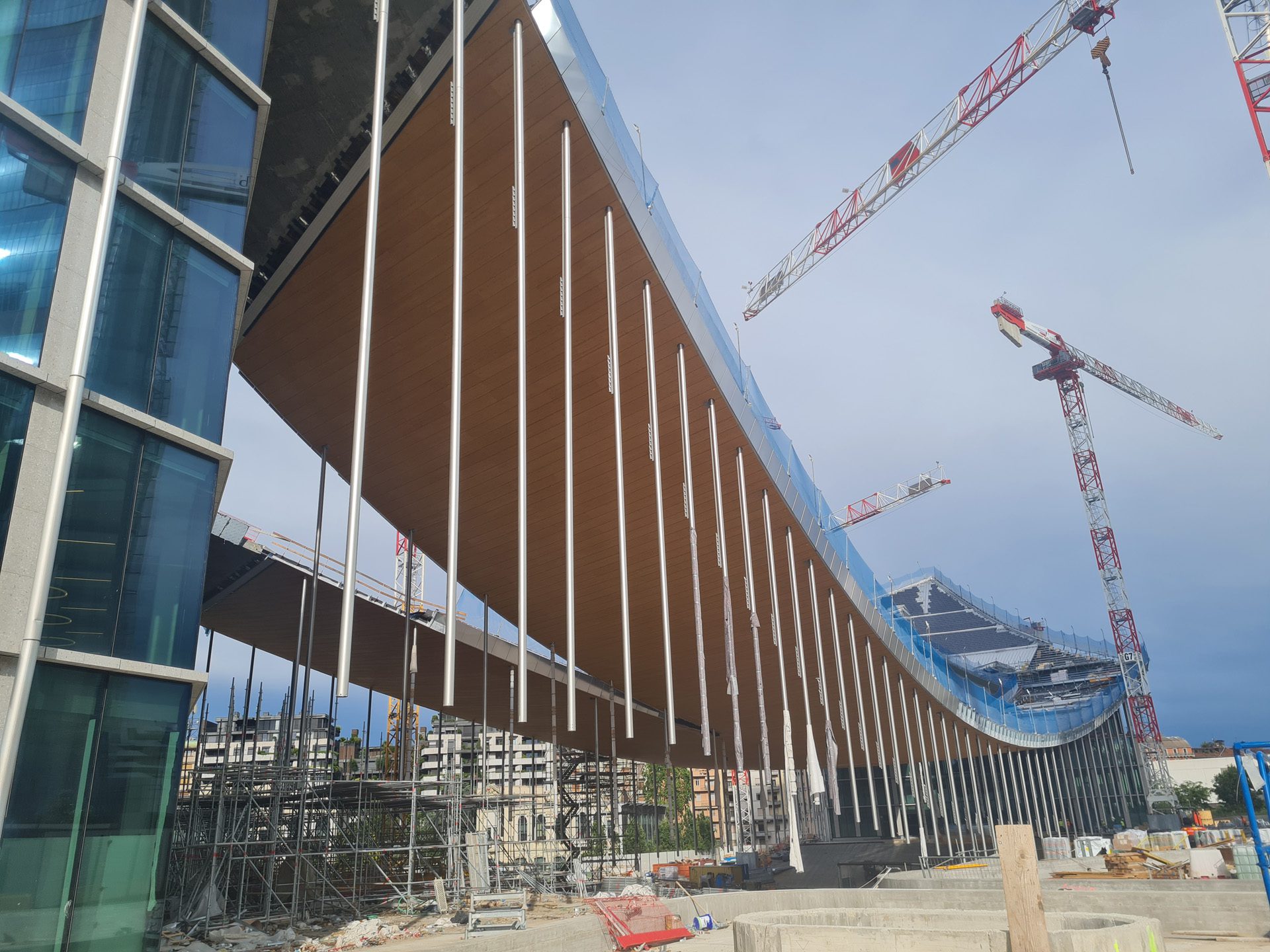
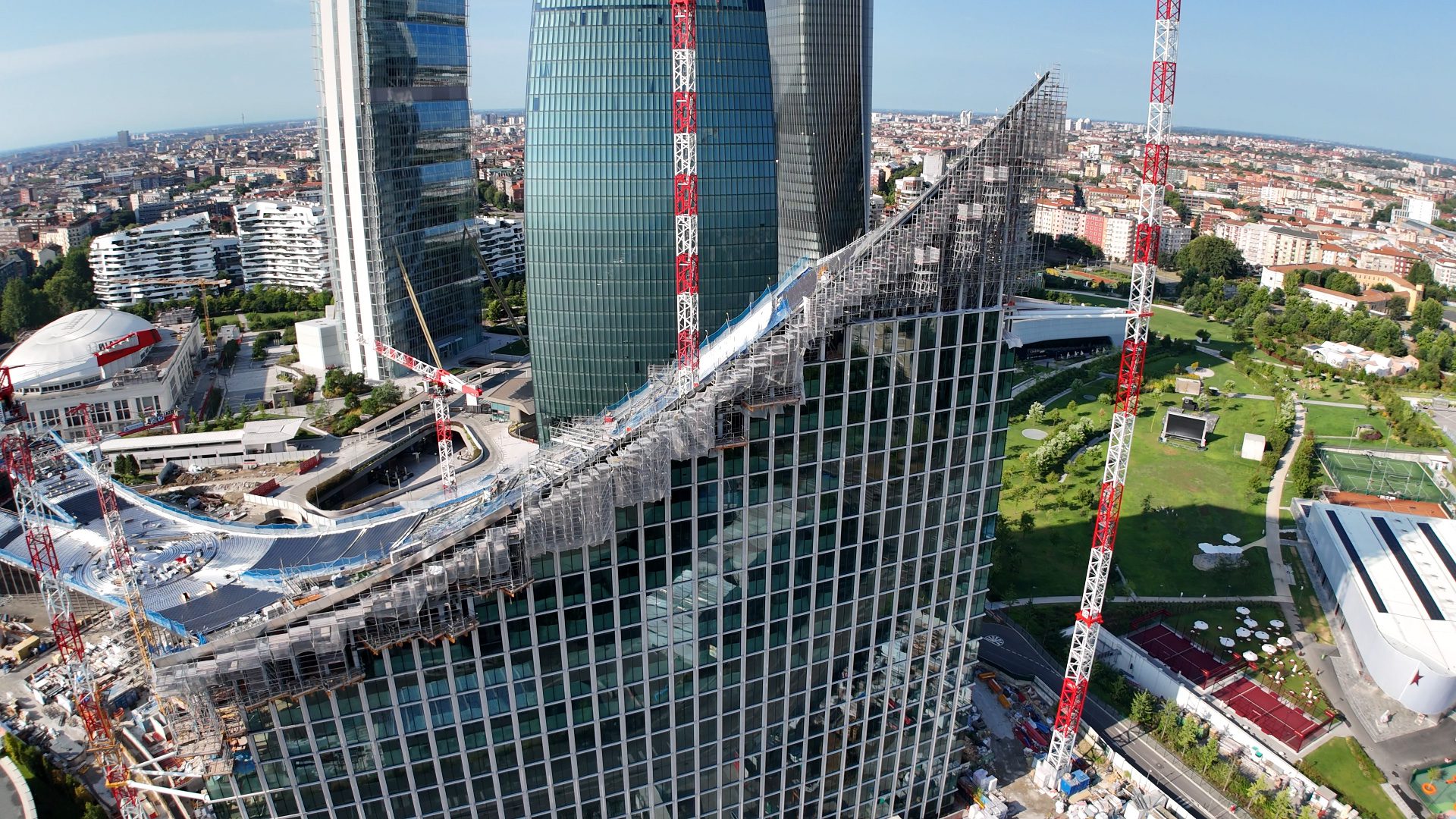
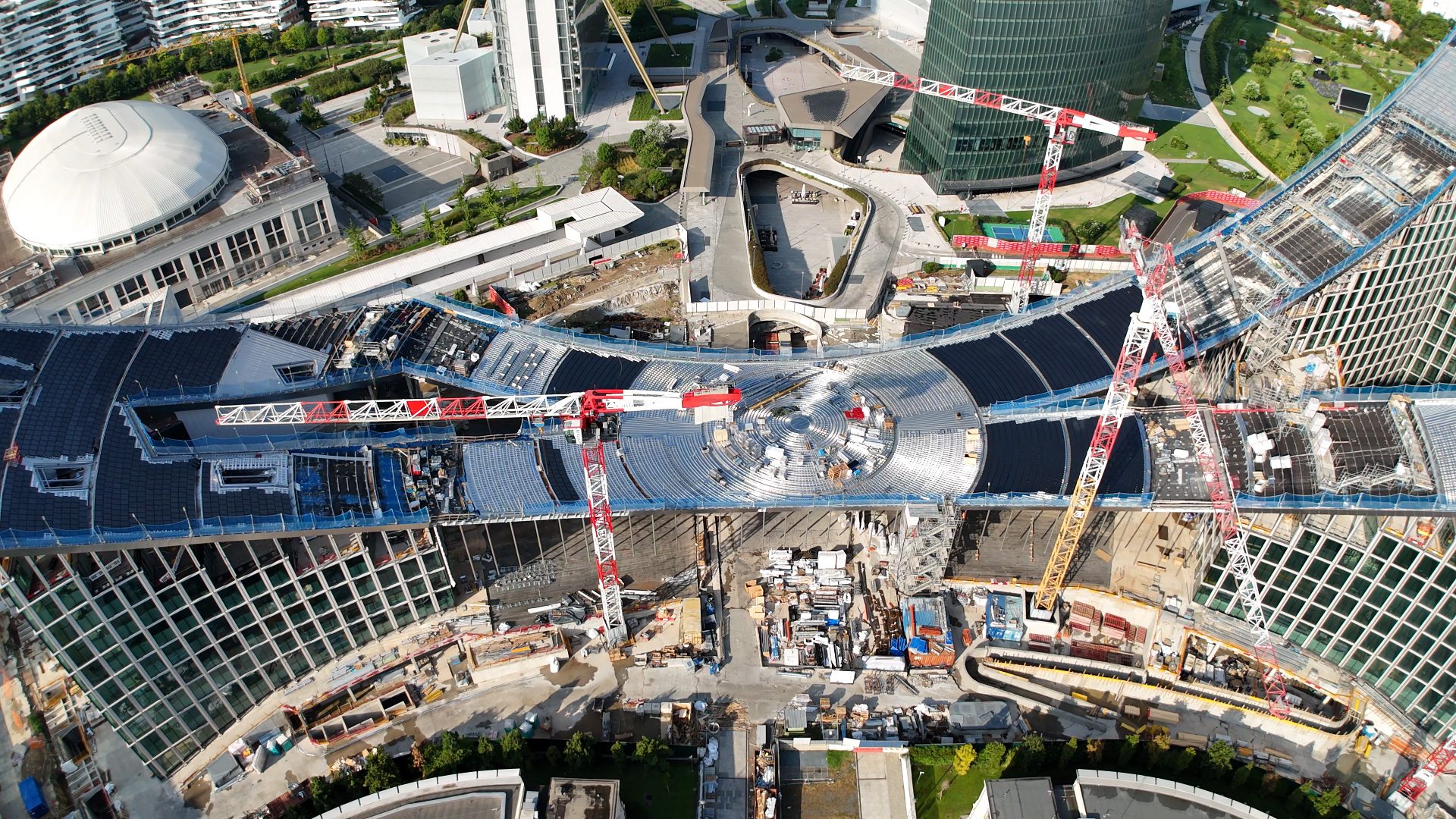
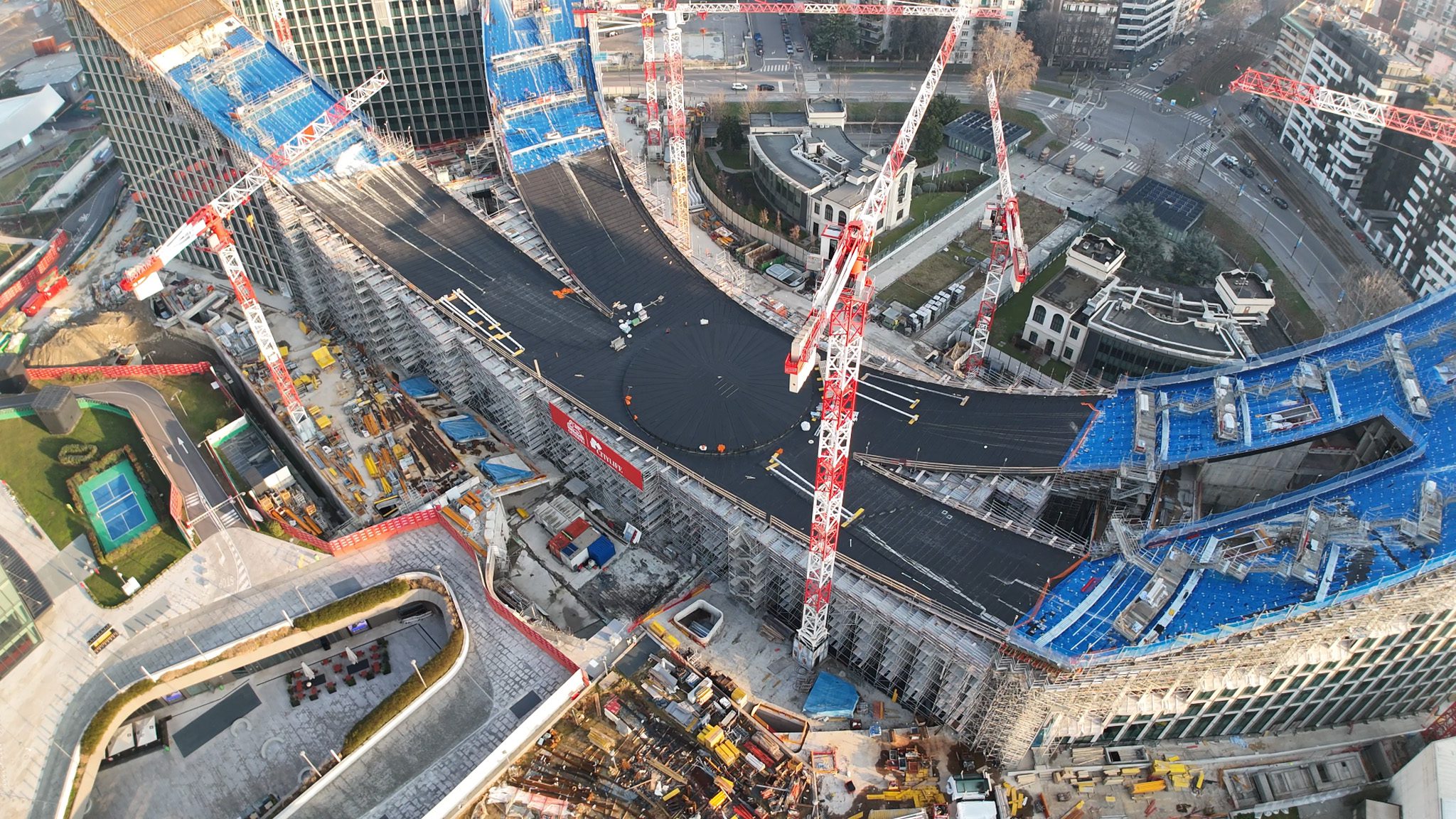
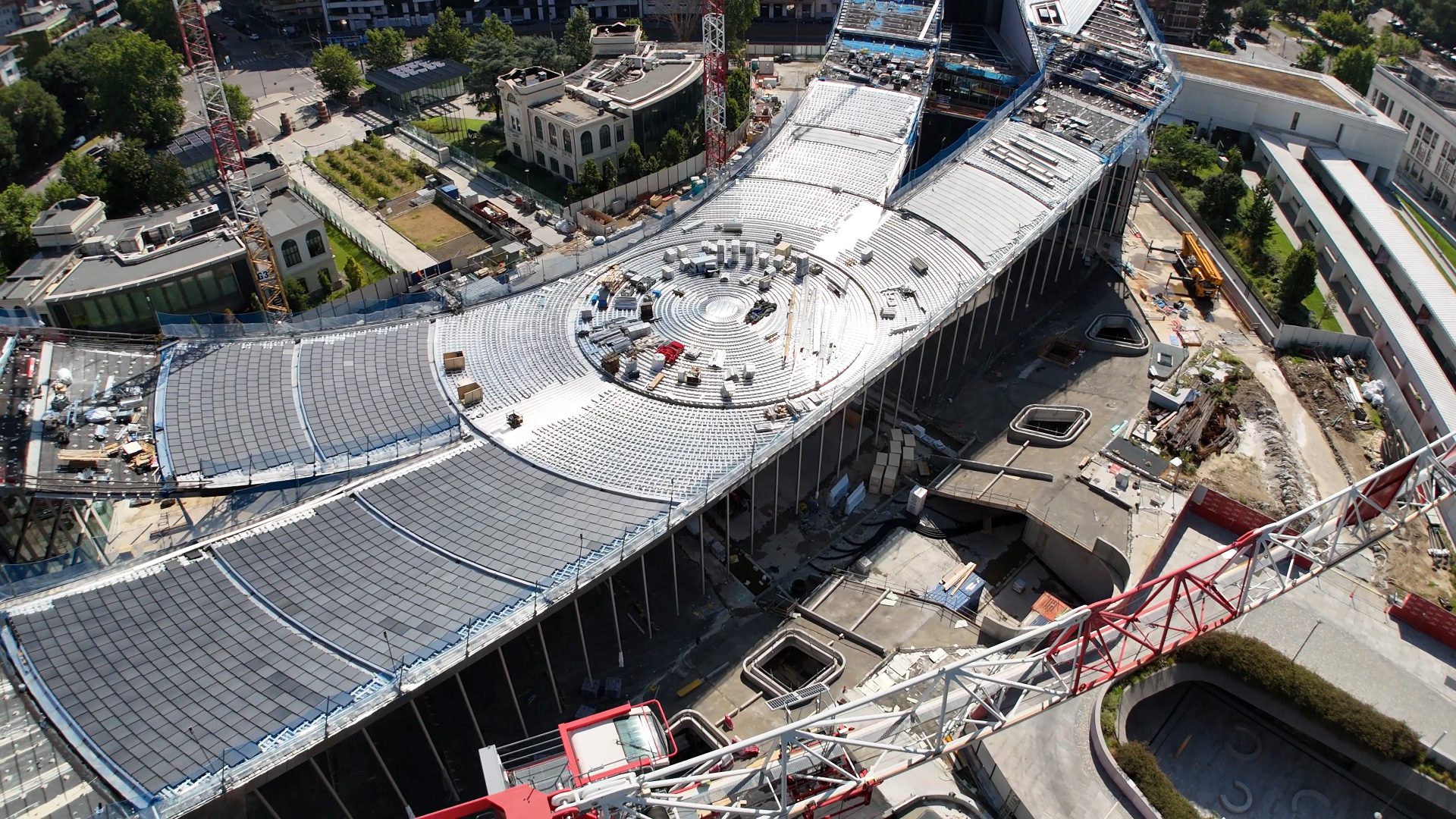
At the core of the project is the Canopy: a large, double curved suspended wave that spans the space between the two buildings with a clear distance of approximately 135 m. It is not only a spectacular architectural gesture but also a significant engineering challenge, made possible through state-of-the-art construction methods.

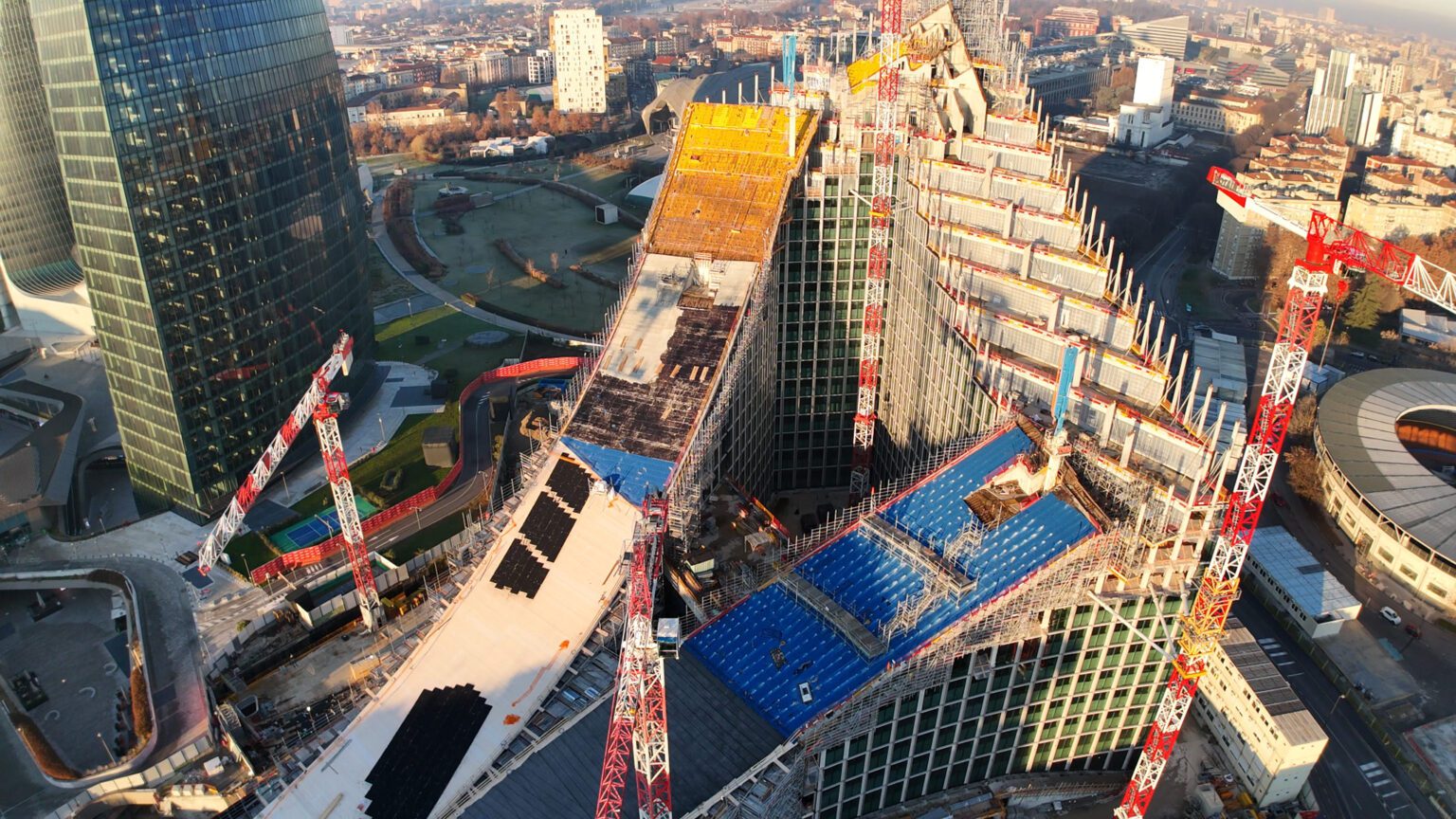
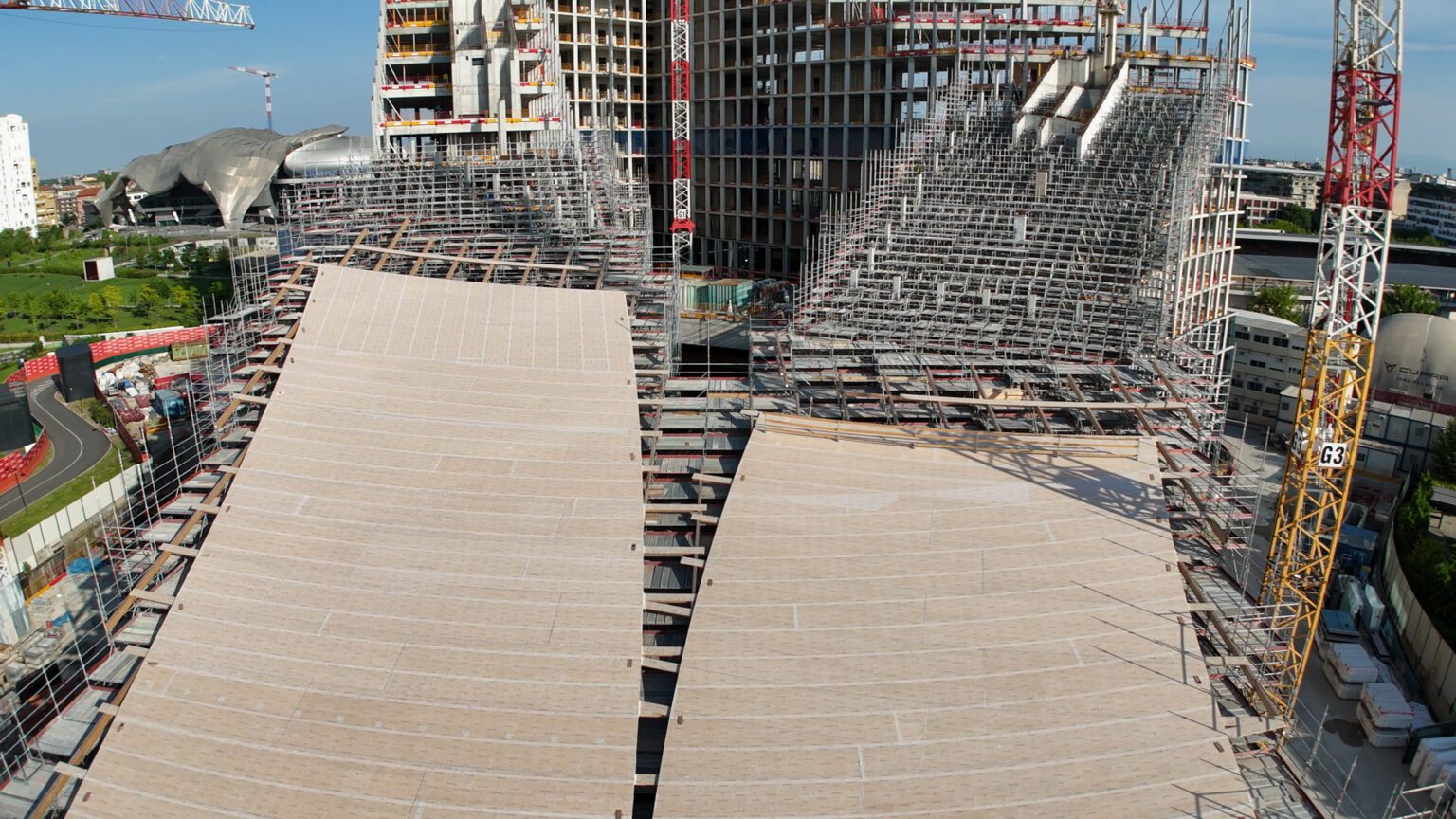
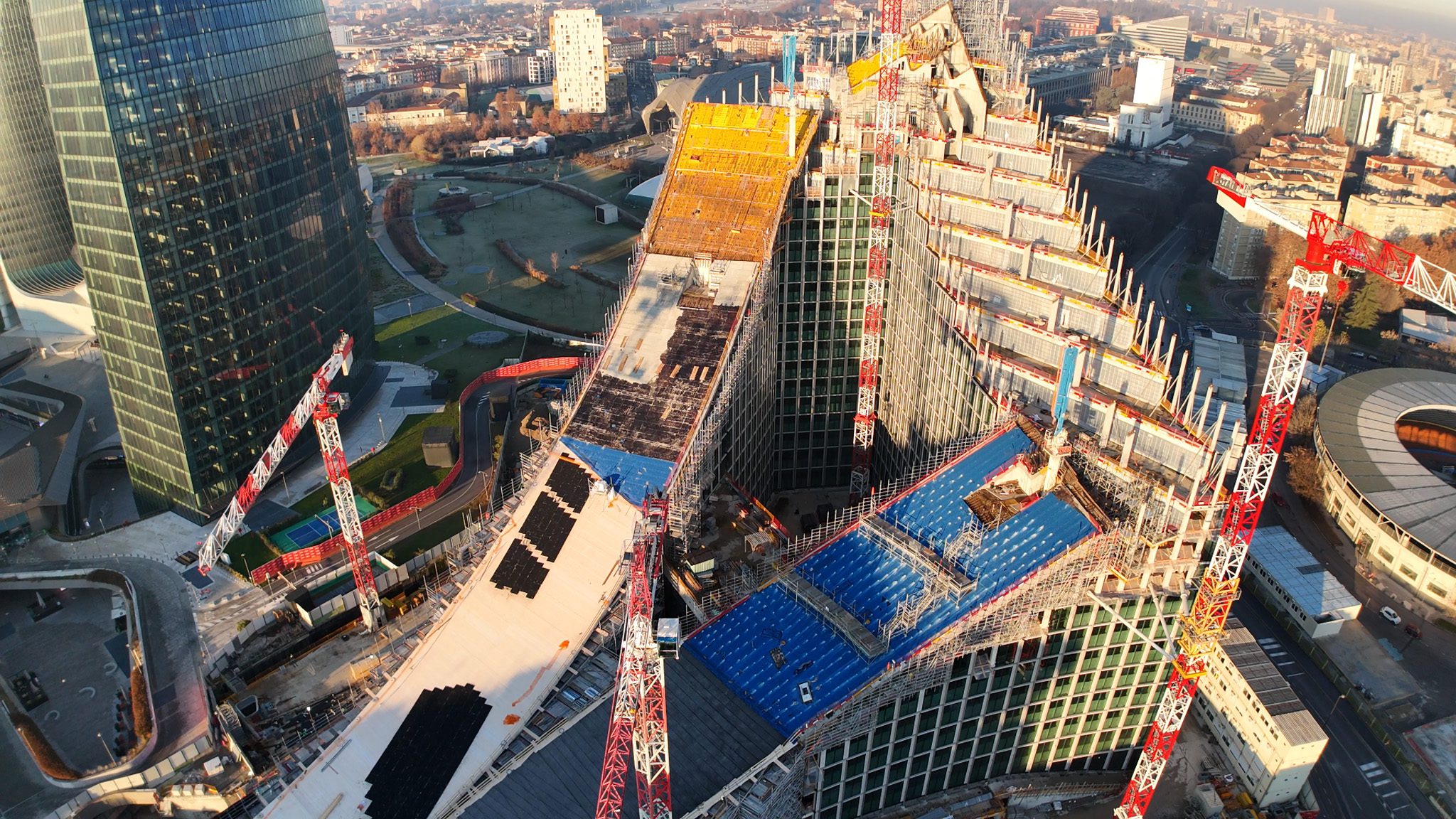
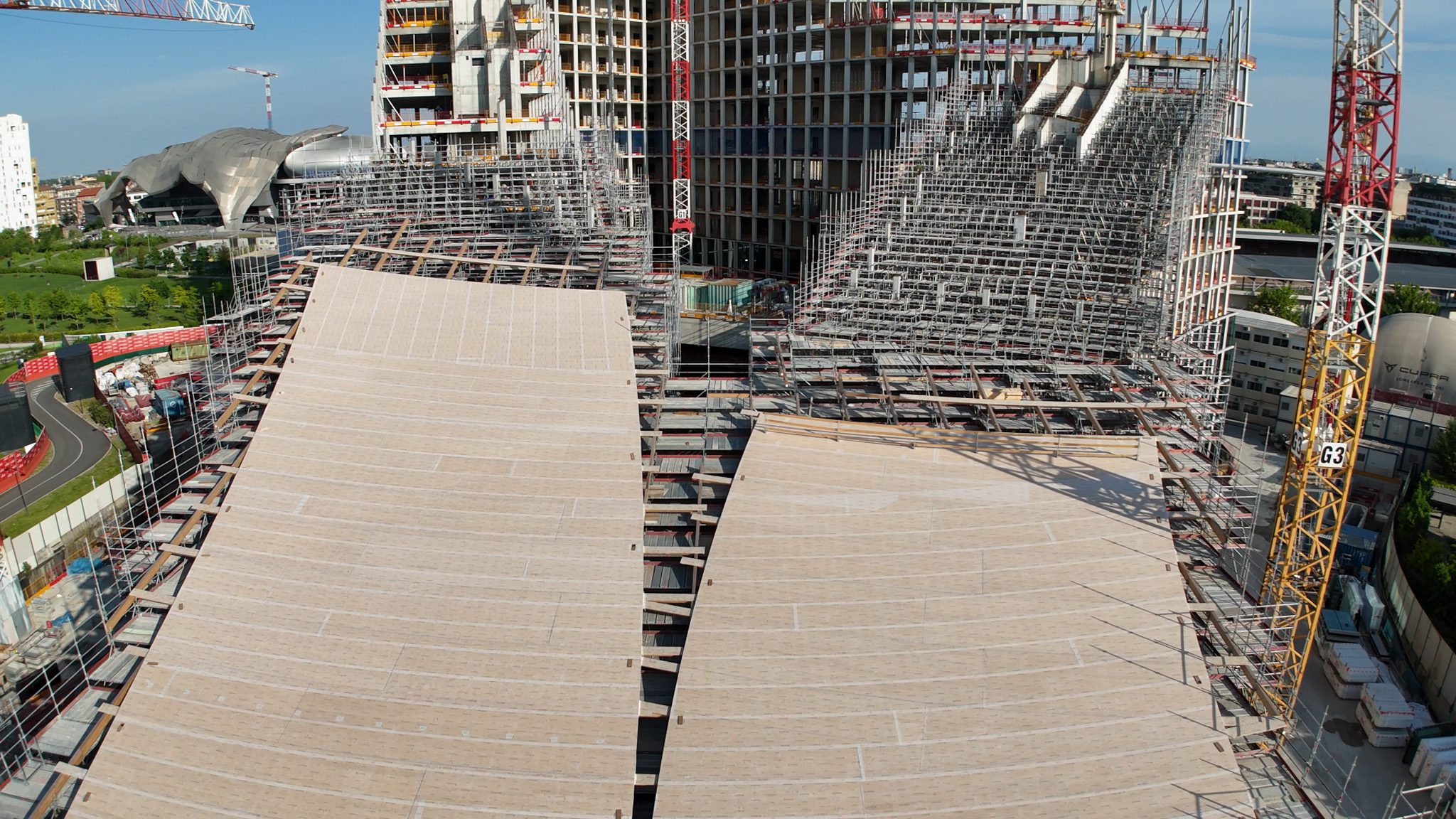
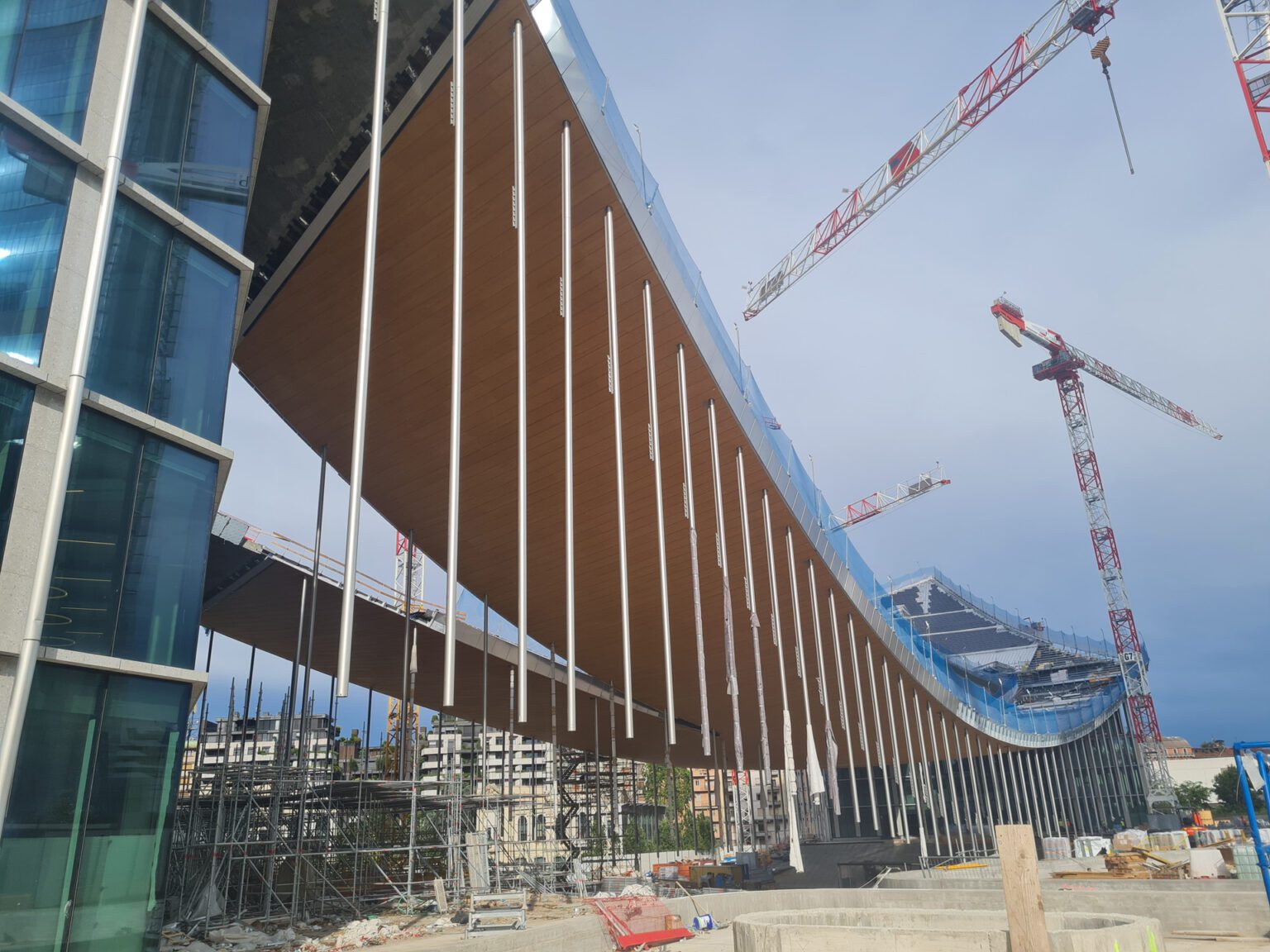
The Canopy structure, with a total surface area of 4,500 m², consists of a system of strand cables anchored to the two buildings and a timber deck made of five cross laminated layers of XLAM panels.
X-LAM panels are widely used in sustainable construction due to their excellent static, seismic and insulation performance. The deck, 40 cm thick, provides global stiffening and distributes loads onto the cables. Given the innovative nature of the XLAM assembly, several tests were conducted at the University of Trento, including full scale experiments on deck portions, to validate theoretical analyses regarding the strength, stiffness and damping characteristics of the timber structure.

The cable technology adopted is the same used in cable stayed bridges, though specifically adapted to the needs of the project. Cable geometry and arrangement were defined through complex analyses to ensure structural stability while preserving the intended architectural form.
The Canopy is stabilized through cable anchorages to the roof structures of the two buildings, built in post tensioned reinforced concrete and characterized by double curvature in line with the architectural profile.

To mitigate wind induced oscillations, custom ECD dampers were designed specifically for this project: the devices are placed within vertical steel tubular elements along the perimeter of the Canopy, serving both aesthetic and rainwater drainage functions. These dampers effectively reduce displacements, velocities and accelerations of the structure under wind loads of any intensity.

Given the exceptional nature of this intervention, unique worldwide, four wind tunnel tests were carried out (in India, Canada and twice at the Politecnico di Milano), using both rigid and aeroelastic models, to evaluate actual wind pressures and the dynamic behavior of the structure, including under extreme conditions. The tests confirmed globally stable behavior even during extreme events.

CityWave is far more than a building—it is a bold vision that seamlessly blends architecture and engineering, beauty and sustainability. Defined by its iconic form and pioneering construction solutions, it represents a landmark achievement, opening a new chapter in Milan’s transformation and shaping the narrative of the city of the future.

116,000
Total built area
475,000
Total building volume
€ 250MLN
Total construction contract value
  • Location Milan (MI), Italy
  • Client Generali S.p.a. / Citylife S.p.a.
  • Architect Bjarke Ingels Group: BIG
  • Construction company Citywave Scarl